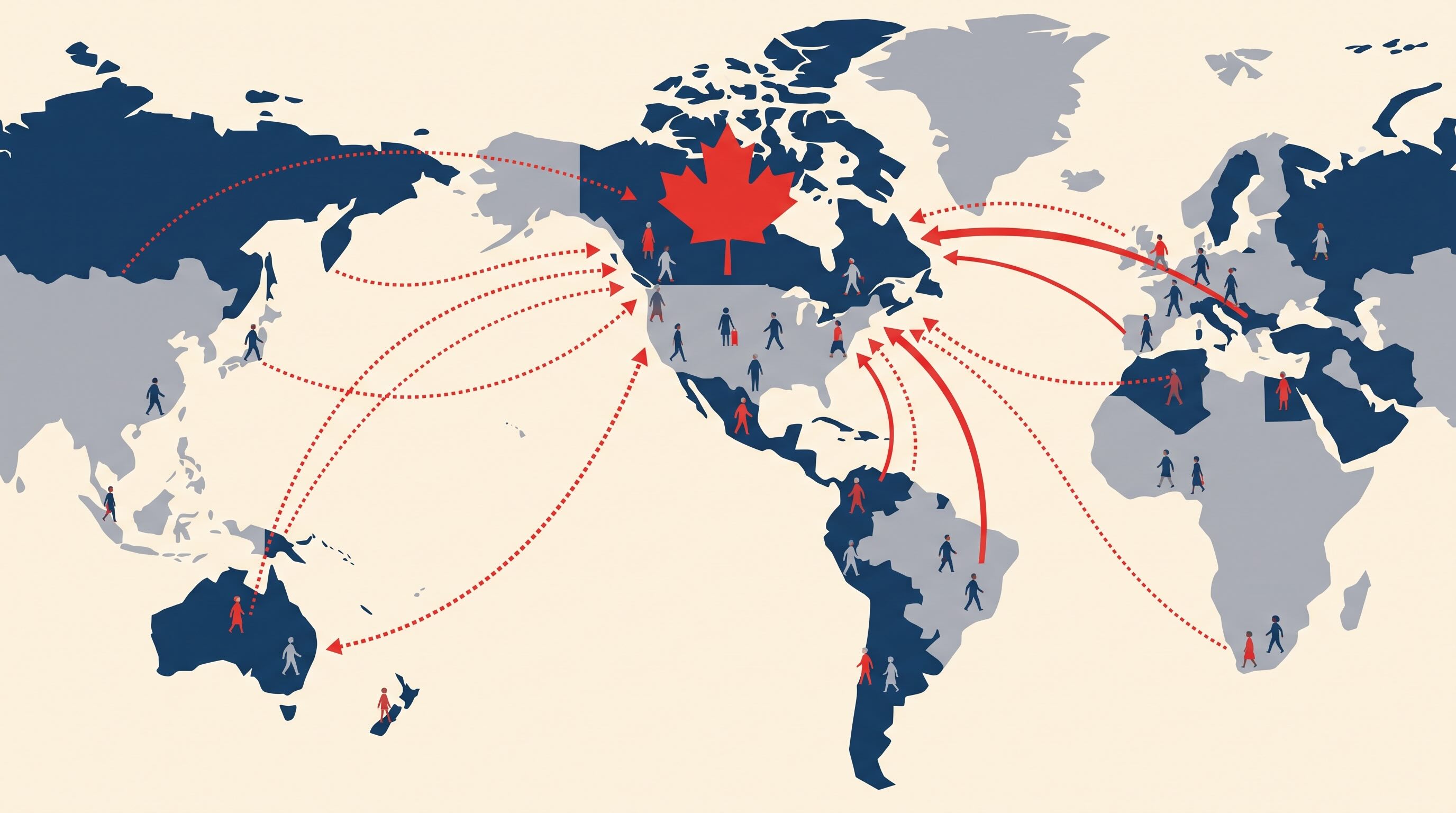
Key details of the September 4 draw
According to the results published by IRCC, the round was open to Express Entry candidates in the pool who fall under the healthcare and social services occupation category. To be invited, candidates had to meet both of the following conditions:
- A CRS score of at least 475; and
- An Express Entry profile created before 12:26 a.m. UTC on May 26, 2026 (the tie-breaking rule for this round).
The 3,500 invitations issued this time represent a slightly smaller round than the 4,000 issued in each of the year's first two healthcare draws, but the cut-off did not soften. Across all three rounds, the 11,500 invitations make healthcare and social services the largest category in 2026 outside of the CEC and French-language proficiency streams.
Healthcare cut-offs are trending higher in 2026
Looking across the three healthcare and social services rounds held in 2026, the cut-off climbed from 467 on February 20 to 475 on June 25 and stayed at 475 in this round. Measured against 2025, that sits at the upper end of the range seen in the second half of that year: IRCC held nine healthcare rounds in 2025 with cut-offs swinging between 462 and 510, and several of the later rounds landed between 462 and 476. The final round of the year, on December 11, 2025, issued 1,000 invitations at 476.
Part of the reason cut-offs have risen is the category overhaul IRCC announced on February 19, 2026. The new framework retained five categories — French-language proficiency, healthcare and social services, education, STEM, and trades — while adding five more: physicians with Canadian work experience, researchers, senior managers with Canadian work experience, transport occupations, and skilled military recruits. The agriculture and agri-food category was discontinued. More consequential still, the minimum work-experience requirement for renewed categories was raised from six months to one year, a change IRCC said was intended to ensure that invited candidates align more closely with real labour market needs. The effect is a higher bar for entry into the healthcare pool — without any corresponding easing of competition among those who do qualify.
| Draw date | CRS cut-off | ITAs issued |
|---|---|---|
| September 4, 2026 | 475 | 3,500 |
| June 25, 2026 | 475 | 4,000 |
| February 20, 2026 | 467 | 4,000 |
| December 11, 2025 | 476 | 1,000 |
| November 14, 2025 | 462 | 3,500 |
| October 15, 2025 | 472 | 2,500 |
| August 19, 2025 | 470 | 2,500 |
| July 22, 2025 | 475 | 4,000 |
| June 4, 2025 | 504 | 500 |
| May 2, 2025 | 510 | 500 |
Recent draw cadence: in-Canada candidates remain the main line
This round followed two draws already held in September: a CEC round on September 1 that issued 2,000 invitations at 521, and a September 3 round for physicians with Canadian work experience that issued 229 invitations at 198. August brought a sequence of Provincial Nominee Program (PNP), CEC, French-language proficiency and transport draws, the largest of which was the August 19 French-language round that issued 5,000 invitations at 382.
Viewed across the full year, candidates with an existing connection to Canada have consistently been at the centre of Express Entry selection in 2026. Of the 53 draws IRCC has held so far this year, 17 were PNP rounds, 15 were CEC rounds and 10 targeted French-language proficiency — 42 draws between them. The physicians with Canadian work experience category accounted for three rounds, healthcare and social services for three, and senior managers with Canadian work experience for two, while the trades, transport and skilled military recruit categories were each drawn once.
| Draw type | Draws in 2026 | ITAs issued in 2026 |
|---|---|---|
| Provincial Nominee Program (PNP) | 17 | 7,961 |
| Canadian Experience Class (CEC) | 15 | 51,250 |
| French-language proficiency | 10 | 50,500 |
| Healthcare and social services | 3 | 11,500 |
| Physicians with Canadian work experience | 3 | 891 |
| Senior managers with Canadian work experience | 2 | 750 |
| Trades | 1 | 3,000 |
| Transport | 1 | 300 |
| Skilled military recruits | 1 | 4 |
| Total | 53 | 126,156 |
By volume of invitations, the CEC leads with 51,250, followed closely by the French-language proficiency category at 50,500. Together the two exceed 100,000 invitations, more than 80 percent of the year's total. PNP draws, by contrast, have been the most frequent but the smallest, producing only 7,961 invitations in aggregate. Because PNP candidates carry an automatic 600-point provincial nomination bonus, their cut-offs — which have ranged from 697 to 805 this year — are not directly comparable with those of other categories.
Policy backdrop and what it means for applicants
Under the 2026-2028 Immigration Levels Plan, the federal government has set a target of 380,000 new permanent residents for 2026, including 239,800 in the economic class, 109,000 under Federal High Skilled programs (which encompass the Express Entry streams) and 91,500 through the PNP. With overall admissions levelling off, IRCC has been using category-based draws to direct a finite number of spaces toward the sectors facing the sharpest shortages, and healthcare and social services is among the priorities. In its coverage of this year's healthcare rounds, CIC News likewise noted that IRCC has continued to prioritize invitations to these professionals through category-based selection in the face of persistent labour shortages.
For health and social services workers, the signals from 2026 are relatively clear:
- Healthcare draws have maintained the regular cadence established in the second half of 2025, with three rounds so far this year spaced roughly three to four months apart;
- The cut-off rose from 467 at the start of the year and has settled at 475 — still well below the 500-plus levels seen in the first half of 2025, but unlikely to fall sharply in the near term;
- Since February, applicants have needed at least one year of full-time (or equivalent part-time) work experience in a single eligible occupation to enter the category's pool;
- Physicians with Canadian work experience now have a dedicated category of their own, and its three rounds this year carried cut-offs of just 169 to 223, making it the pathway eligible doctors should look at first.
Immigration practitioners suggest that the new one-year experience threshold will narrow the number of invitable candidates in the healthcare pool, but that IRCC's decision to keep issuing rounds in the thousands indicates a strong likelihood of further healthcare draws in the second half of the year. Candidates sitting near 475 can improve their standing by raising language test scores, adding Canadian work experience, or pursuing a provincial nomination.