
The best is yet to come
OK
Log out of UNA?
Log out
Cancel
Get Personalized Immigration Plans in 5 Minutes
My Appointments
Welcome to UNA
Canada makes rural immigration pilot permanent, sets 2027 admissions target at 5,500

Rural immigration gets its first separate annual admissions target

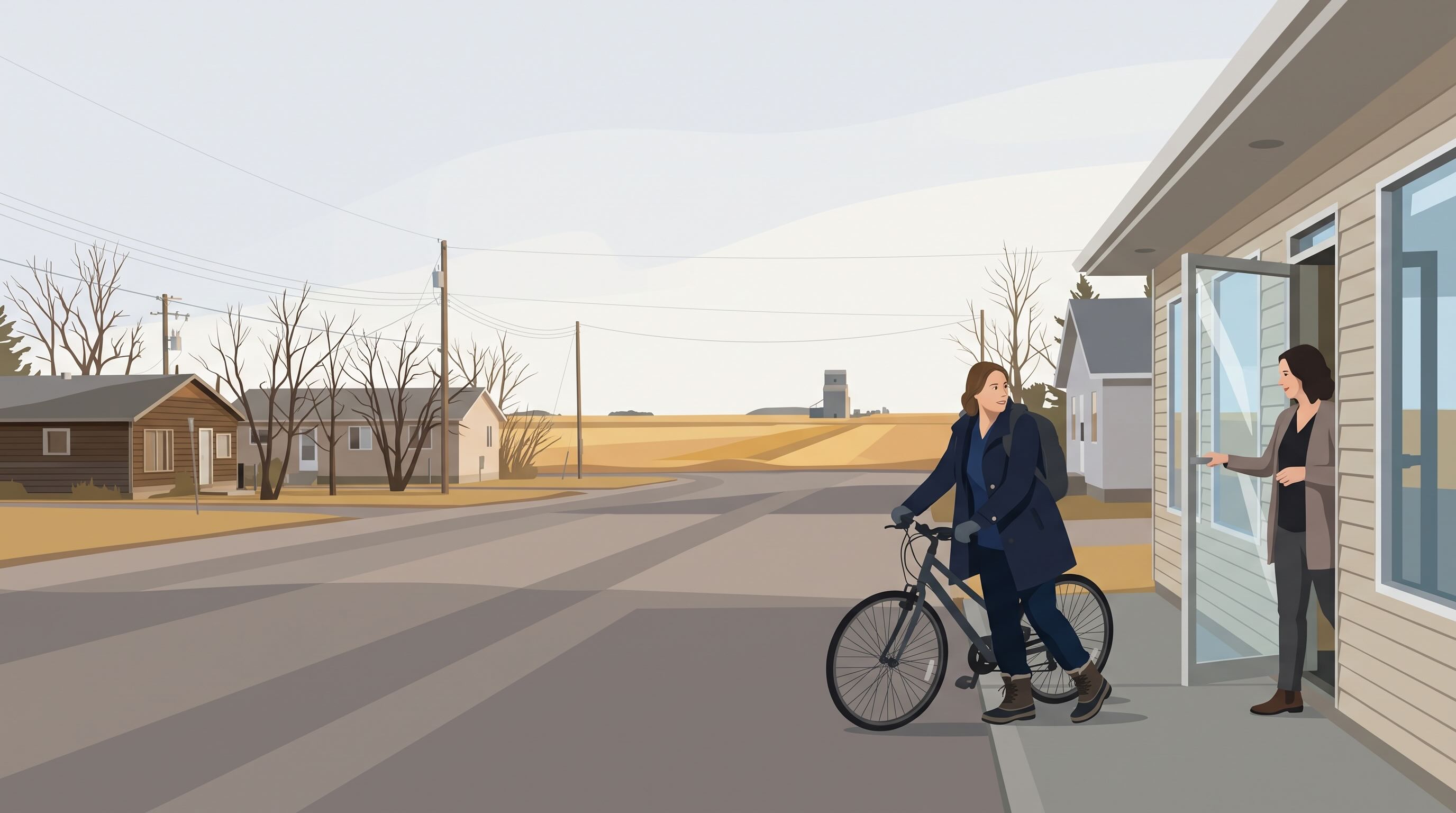
The federal government’s 2027–2029 Immigration Levels Plan, released November 5, sets a separate target for the Rural Community Immigration Program. Ottawa plans to admit 5,500 permanent residents under the category in 2027. It has set provisional targets of 6,000 for 2028 and 6,500 for 2029, which it will confirm or adjust each year.

Each year’s total will include people who become permanent residents through the new program, as well as those admitted that year after applying under the Rural Community Immigration Pilot or its predecessor, the Rural and Northern Immigration Pilot. In 2026, the rural pilot shared a target of 8,175 admissions with several other federal economic immigration pilots.

Fourteen communities across six provinces are expected to continue

The permanent program will follow the pilot’s model. Communities identify priority sectors and occupations based on local hiring needs, and local economic development organizations screen and designate employers. Ottawa plans to expand the program to more communities but had yet to name them as of November 9.

ProvinceCommunities or regions expected to continue
Nova ScotiaPictou County
OntarioNorth Bay, Sudbury, Timmins, Sault Ste. Marie, Thunder Bay
ManitobaSteinbach, Altona/Rhineland, Brandon
SaskatchewanMoose Jaw
AlbertaClaresholm
British ColumbiaWest Kootenay, North Okanagan Shuswap, Peace Liard

The recommendation date determines which forms to use

Skilled foreign workers and international graduates who want to work and settle in a participating community must first secure a qualifying job offer from a designated local employer. The employer then requests a recommendation from the community. Once they receive the recommendation, candidates can apply for permanent residence. They must meet the applicable language, education and settlement fund requirements. Applicants generally need at least one year of related work experience in the past three years. International graduates of local public post-secondary institutions may qualify for an exemption from the work experience requirement.

The department will continue processing applications submitted under the pilot. For those who have a community recommendation and have yet to apply, the date on the recommendation determines which forms to use.

  • Recommendations issued on or before December 31, 2026. Applicants must use the pilot forms and apply before their recommendation expires, even if they submit their application in 2027.
  • Recommendations issued on or after January 1, 2027. Applicants must use the new permanent program forms.

After submitting their permanent residence application, eligible applicants can apply for a two-year work permit to work for the designated employer that made the offer while they await a decision. Their spouse or common-law partner can apply at the same time for an open work permit that, if approved, allows them to work for different employers within the same participating community.

Newcomers help fill vacancies in health care and education

Diab said the rural pilot has admitted more than 1,500 people, including accompanying family members, since it launched in 2025. From January 2025 to August 2026, participating communities designated more than 1,950 employers. More than 4,700 job offers and community recommendations were issued during that period. Newcomers who settled through the pilot have helped fill long-standing vacancies in health care, education, sales and services.

The predecessor program, the Rural and Northern Immigration Pilot (RNIP), ran from 2019 to 2024 and admitted more than 12,500 people, including accompanying family members.

Friendly reminder: There are many pathways to immigrate to Canada. We recommend first using UNA AI to generate an objective and neutral immigration plan, so you can gain an initial understanding of the possible immigration pathways and their requirements, and then choose to proceed with one-on-one consultations with a licensed Canadian immigration consultant partnered with UNA.
加拿大低薪类别 LMIA 有效期由一年延长至两年
Canada doubles low-wage LMIA validity to two years
Employment and Social Development Canada (ESDC) announced on November 6, 2026 that the maximum validity of a low-wage stream Labour Market Impact Assessment (LMIA) will rise from one year to two, applying to every low-wage LMIA application filed on or after that date. Positions filled through the low-wage stream can now be authorized for up to two years at a time, and employers no longer have to repeat the LMIA process every year. A second change effective the same day adds early childhood educators to the exemptions from the freeze that suspends low-wage applications in areas with unemployment of 6% or higher, placing them alongside health care, construction and food processing. The easing does not touch the freeze itself: as of publication, unemployment is at 6% or above in all 30 census metropolitan areas (CMAs), so non-exempt low-wage positions there still cannot obtain an LMIA, and foreign workers whose permits are about to expire face losing legal status. ESDC will update the list on January 8, 2027, and the federal government has proposed a regional framework that would take effect on March 1, 2027, if provinces and territories choose to join.
11/11/2026
加拿大农村社区移民试点明年转为常设,2027年计划接收5500名永久居民
Canada makes rural immigration pilot permanent, sets 2027 admissions target at 5,500
Canada will make the Rural Community Immigration Pilot (RCIP) permanent on January 1, 2027. Immigration Minister Lena Metlege Diab announced the change in Stellarton, Nova Scotia, on November 9, 2026. The 14 pilot communities across six provinces are expected to continue participating. Ottawa has set a first-year admissions target of 5,500 for the category. The department will continue processing permanent residence applications already submitted. Applicants who hold a valid community recommendation and have yet to apply will choose their forms based on the date the recommendation was issued.
11/10/2026
阿尔伯塔省五轮发出425份省提名申请邀请,乡村振兴类别占近半
Alberta invites 425 workers to apply for provincial nomination, nearly half through the Rural Renewal Stream
Alberta invited 425 workers to apply for provincial nomination in five draws from Oct. 23 to Nov. 2, 2026, according to figures the province released on Nov. 4. The Alberta Advantage Immigration Program (AAIP) issued 210 invitations through the Rural Renewal Stream, 132 through the Alberta Opportunity Stream and 83 through its Dedicated Health Care Pathway. Rural renewal and health care, both provincial priorities for 2026, accounted for nearly 70% of the invitations.
11/09/2026
加拿大2027年永居配额维持38万,另开20万个境内转永居名额
Canada holds permanent residence at 380,000 while opening 200,000 in-Canada spaces for 2027
On November 5, 2026, the federal government released Budget 2026 and the 2027–2029 Immigration Levels Plan together, announcing up to 200,000 additional spaces in 2027 to move temporary residents already in Canada to permanent residence, on top of the regular admission targets. Half of that room—100,000 places—is earmarked for skilled workers through Express Entry and the Provincial Nominee Program (PNP) in partnership with the provinces and territories; the other 100,000 is meant to clear the remaining applications in the Hong Kong permanent residence pathways and the Ukraine family reunification pathway, applications from people already approved in principle on humanitarian and compassionate (H&C) grounds, and pending applications from spouses, common-law partners and children of Canadian citizens and permanent residents. Regular permanent residence targets are frozen at 380,000 a year (range 352,500–422,000) for 2027, 2028 and 2029, with the economic class holding steady at 64.4%; adding the 200,000 in-Canada spaces to the 422,000 top of the range produces the widely cited 622,000 figure. Temporary resident arrivals are fixed at 370,000 a year—220,000 workers and 150,000 students—for all three years. Ottawa also confirmed it will finish the 148,000 admissions promised under the two 2026–2027 one-time initiatives, but neither document says whether the roughly 100,000 admissions still outstanding are counted inside the 200,000 or stacked on top of the 622,000.
11/07/2026
11月加拿大移民政策密集换挡:快速通道改计分,2029年移民目标随预算揭晓
Eight Canadian Immigration Rules Change in Under a Month, From Express Entry Scoring to Land Border Hours
Eight adjustments to Canadian immigration are packed into less than 30 days of November 2026. The federal budget, due on November 5, is to carry the 2027-2029 Immigration Levels Plan, which will set a permanent resident target for 2029 for the first time; the plan is already past the November 1 deadline set by the Immigration and Refugee Protection Act. On November 3 the Comprehensive Ranking System (CRS) gained a Labour Market Integration Factor, sending all 228,000 profiles in the pool into recalculation, with draws paused for up to two weeks, and job offers stopped needing a Labour Market Impact Assessment (LMIA) the same day. Administrative penalties for immigration representatives, in force since late October, set fines of $5,000 per violation for paid work by unlicensed agents and $15,000 for wilful misrepresentation, capped at $1.5 million. At the border, 26 Canada-US land crossings have new hours from November 1 and Remote Area Border Crossing (RABC) permits lapse late on November 30, to be replaced from December 1 by in-person or telephone reporting. In addition, work permit applications awaiting an LMIA decision are no longer bound by a 90-day limit, and temporary measures covering the Democratic Republic of the Congo, Uganda and South Sudan expire on November 27.
11/05/2026
快速通道新计分11月3日落地:186个高薪职业可获加分,LMIA要求同日取消,抽签暂停待重算
High-wage points go live: 186 occupations now earn bonus CRS points, LMIA requirement dropped, Express Entry draws paused for rescoring
The changes Immigration, Refugees and Citizenship Canada (IRCC) announced on Oct. 16 took effect on Nov. 3, 2026: Express Entry candidates can now earn bonus Comprehensive Ranking System (CRS) points for a job offer or Canadian work experience in any of 186 high-wage occupations, and a Labour Market Impact Assessment (LMIA) is no longer required for a qualifying job offer. The new section is called the Labour Market Integration Factor (LMIF). Candidates are scored on one of two routes — up to 100 points for a qualifying high-wage job offer, or up to 150 points for Canadian work experience (140 with a spouse or common-law partner), combining existing work-length points with up to 70 points for high-wage experience — and receive whichever total is higher; the two are never added together. Occupations are grouped at 1.3, 1.5 and 2 times the Canada-wide median wage, with 66, 89 and 31 occupations in each tier respectively. Because every profile in the pool must be rescored, IRCC paused all invitation rounds on Nov. 3; the recalculation "may take up to two weeks," putting the restart around Nov. 17. Before the pause the pool held 228,724 candidates, IRCC had issued 149,409 invitations in 2026, and the most recent Canadian Experience Class cutoff stood at 519.
11/04/2026
新不伦瑞克省三轮筛选选出203人 大西洋移民计划全年累计898人
New Brunswick selects 203 candidates in three October draws, lifting 2026 AIP total to 898
In October 2026, New Brunswick held three Atlantic Immigration Program (AIP) selection rounds, on Oct. 2, Oct. 9 and Oct. 29, advancing 203 workers to the processing stage of endorsement applications across eight occupational categories: construction, health care, manufacturing, education and social services, other technical trades, professional and information technology, sales and services, and transportation. It was the largest single round of the province's nine rounds this year and lifted the 2026 cumulative total to 898. Under the program design, candidates approved by the province receive an endorsement certificate and can then apply to the federal government for permanent residence (PR); endorsement also opens a second route, a two-year employer-specific work permit issued by Immigration, Refugees and Citizenship Canada (IRCC), and those who apply before their existing permit expires may keep working under maintained status. The expansion has unfolded alongside a policy overhaul stretching back half a year: since February, New Brunswick has moved AIP to a candidate pool model, paused new employer designation applications and cut its restricted occupation list from eight to four, while Ottawa raised 2026 provincial allocations by about a third (31%). AIP permanent residence processing still runs 26 months, and AIP applicants cannot apply for a bridging open work permit.
11/03/2026
纽芬兰与拉布拉多省两轮抽签发出205份邀请,NLPNP占比约95%
Newfoundland and Labrador issues 205 invitations across two draws, with NLPNP accounting for about 95%
Newfoundland and Labrador held two provincial selection rounds on October 23 and October 29, 2026, issuing 205 invitations in total, of which 195 went to candidates through the Newfoundland and Labrador Provincial Nominee Program (NLPNP) and 10 through the Atlantic Immigration Program (AIP), leaving NLPNP with about 95% of the invitations. Invited candidates must file a complete nomination or endorsement application with the province within 30 days, down from 60 days previously, and only after a nomination or endorsement certificate is issued can they apply to the federal government for permanent residence (PR). On work permit continuity, a federal temporary measure in force from June 9, 2026 until December 31, 2026 allows eligible in-Canada base-stream PNP applicants to apply for a Bridging Open Work Permit (BOWP) without first obtaining an acknowledgement of receipt (AOR); AIP endorsees fall outside that measure but may apply for an employer-specific work permit valid for up to two years. As of October 29 the province had held 20 draws this year and issued 3,157 invitations, 2,750 through NLPNP and 407 through AIP, already above its full-year allocation of 2,854 nominations, while AIP's share of invitations fell from 26.7% for all of 2025 to 12.9%.
10/31/2026
快速通道第453轮:运输职业类别发出150份邀请,分数线升至477分
Express Entry draw #453: 150 invitations for transport occupations as the cut-off climbs to CRS 477
Immigration, Refugees and Citizenship Canada (IRCC) held Express Entry draw #453 on October 28, 2026, issuing 150 Invitations to Apply (ITAs) for permanent residence to candidates in the Transport Occupations, 2026-Version 2 category at a minimum Comprehensive Ranking System (CRS) score of 477. It was the transport category's second round of 2026 and its second since the category returned in February with a rebuilt occupation list: against the 300 invitations issued on August 7, the round was half the size and the cut-off rose 7 points from 470. The draw takes IRCC to 65 rounds and 149,409 invitations for the year, of which transport accounts for 450, or 0.3%, and it is the last round to be issued before a revised CRS takes effect on November 3, when draws pause for up to two weeks while every profile in the pool is rescored.
10/29/2026
加拿大快速通道两日发出5,792份邀请:法语类别5,000人、分数线回落至407分,省提名792人门槛761分
Canada issues 5,792 Express Entry invitations in two days: 792 PNP candidates at CRS 761, 5,000 French speakers at CRS 407
Immigration, Refugees and Citizenship Canada (IRCC) held Express Entry draws #451 and #452 on October 26 and 27, 2026, issuing a combined 5,792 Invitations to Apply (ITAs) for permanent resident (PR) status. The October 26 Provincial Nominee Program (PNP) draw issued 792 invitations at a minimum Comprehensive Ranking System (CRS) score of 761, 11 points below the previous round 13 days earlier and the second-largest round of 2026, while the October 27 French-language proficiency draw issued 5,000 invitations at CRS 407, 28 points below the round held 11 days earlier and equal to 86.3% of the two-day total. IRCC has now held 64 draws and issued 149,259 invitations in 2026, with the French-language category accounting for 40.5% of the year's volume on 12 rounds and 60,500 invitations, ahead of the Canadian Experience Class (CEC) at 38.7% and the PNP at 7.2%. Both rounds were the last to be issued before IRCC switches to a revised CRS on November 3 and pauses draws for up to two weeks to recalculate scores.
10/28/2026
Sorry, your request failed
Please try again
OK