Inside the June 22 draw
The June 22 round was the 31st Express Entry draw of 2026 and the first of the month. IRCC sent 955 invitations to PNP candidates with the CRS cut-off set at 730. Because a provincial nomination certificate adds 600 points to a candidate's CRS score — all but guaranteeing an invitation — PNP cut-offs typically sit well above those of other categories; the 730 threshold implies that successful candidates held a base score of roughly 130 before the nomination bonus. When candidates are tied at the cut-off, IRCC uses the profile-creation date as the tie-breaker, and this round required a profile created before 1:02 a.m. UTC on March 9, 2026.
Both the size of the round and its cut-off marked a clear shift from recent PNP draws. The previous PNP round, on May 25, carried a cut-off of 805 and issued just 334 invitations; nearly a month later, the June 22 round fell to 730 and jumped to 955 invitations — the largest and lowest-threshold PNP draw of 2026.
A 2026 pattern built around in-Canada candidates
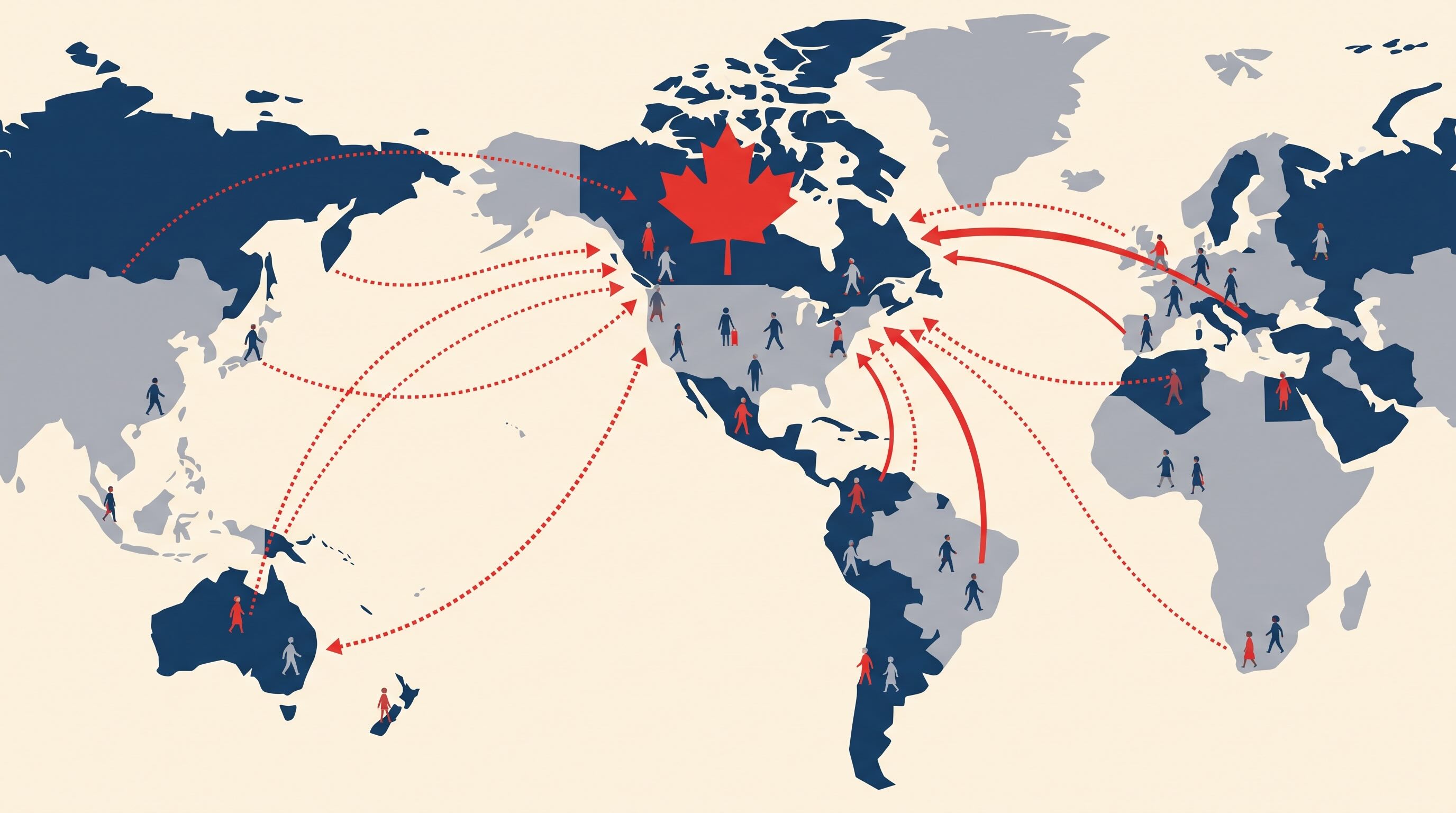
Throughout 2026, IRCC has tilted its Express Entry selections toward candidates already in the country and closely tied to it — particularly those with a provincial nomination or Canadian work experience. The distribution of draws by category this year illustrates that orientation:
| Draw Type | Number of Draws |
|---|---|
| Provincial Nominee Program (PNP) | 12 |
| Canadian Experience Class (CEC) | 9 |
| French-Language proficiency | 6 |
| Physicians with Canadian work experience | 1 |
| Healthcare and social services | 1 |
| Senior Managers with Canadian work experience | 1 |
| Trades | 1 |
The CEC and French-language draws dominate the invitation totals. As of June 22, IRCC has issued 80,796 ITAs in 2026, broken down as follows:
| Draw Type | ITAs Issued |
|---|---|
| Canadian Experience Class (CEC) | 37,250 |
| French-Language proficiency | 30,500 |
| Provincial Nominee Program (PNP) | 5,405 |
| Healthcare and social services | 4,000 |
| Trades | 3,000 |
| Physicians with Canadian work experience | 391 |
| Senior Managers with Canadian work experience | 250 |
| Total | 80,796 |
Together, the Canadian Experience Class and French-language categories account for more than 80 percent of all invitations issued this year, targeting candidates who are already working in Canada or who have French-language ability. Newer 2026 categories such as physicians and senior managers — though limited in both rounds and seats — likewise require Canadian work experience, signalling IRCC's intent to draw precisely on in-Canada talent in shortage occupations.
The roller-coaster of PNP allocations
The Provincial Nominee Program has been through a sharp swing in allocations over the past two years, an important backdrop to this round. In 2024, the federal government set the program's admissions target at roughly 110,000; the 2025 levels plan slashed that by about half to 55,000, and provincial allocations were broadly cut by 50 percent. For 2026, the latest 2026–2028 Immigration Levels Plan raised the PNP target again to 91,500 — up about 66 percent from 2025 — partially reversing the earlier cut. At the same time, the overall permanent-resident target holds at 380,000 a year, with the economic class rising to about 63 percent of admissions, its highest share in more than a decade, underscoring Canada's tilt toward economic and in-Canada talent even as it tightens overall numbers.
What it means for candidates
For candidates still in the pool, the round carries several signals worth noting. First, a provincial nomination remains the surest route to an invitation for in-Canada candidates — the 600-point bonus is effectively a ticket in, provided a candidate first secures a nomination from a province. Second, since March 30, 2026, provinces and territories alone assess whether a candidate intends to settle in the nominating province and can become economically established there; the nomination certificate itself now serves as proof of that assessment, and IRCC no longer conducts a separate review or overrides the province's decision. Third, with CEC cut-offs sitting near two-year lows and the pool of French-speaking candidates thinning, competition is diverging across categories, and candidates should watch the draw activity and profile timing specific to their own category.