A time-limited, one-time measure with up to 250 nominations
On June 15, 2026, the BC PNP posted a notice on its website announcing that the Temporary Rural/Remote Health Support Initiative was open for registration. According to the notice, the initiative is a time-limited, one-time measure that will nominate up to 250 qualifying candidates, registration will close at 11:59 pm on August 31, 2026, and the first Invitation to Apply (ITA) is expected to be issued within the coming weeks. The BC PNP also reminds prospective applicants that every application is assessed against the criteria and policies in effect at the moment of registration or submission, so candidates should follow the most current editions of the official guides closely.
The specific eligibility criteria are set out in the Skills Immigration Program Guide, while instructions on how to submit a registration and application are found in the Skills Immigration Application Guide (formerly the BC PNP Technical Guide). Current and previous editions of both guides are available on the Documents page of the WelcomeBC website.
Not for medical professionals — focused on cleaning and security roles
Contrary to what the phrase "health support" might suggest, the initiative is not aimed at licensed medical professionals such as physicians or nurses. Rather, it is designed to retain workers already performing logistical and support functions within the health system. Based on details the province released earlier, on April 23 and May 28, 2026, eligibility is limited to the following three occupations under the 2021 National Occupational Classification (NOC):
| National Occupational Classification (NOC 2021) | Occupation |
|---|---|
| 65312 | Janitors, caretakers and heavy-duty cleaners |
| 65310 | Light-duty cleaners |
| 64410 | Security guards and related security service occupations |
Applicants must also meet several firm requirements: a permanent, full-time job offer from one of B.C.'s eight public health authorities, in a position located in a rural or remote community; at least nine months of continuous, full-time work with the same employer before registering; and a minimum level of secondary education together with a minimum income. Notably, the initiative requires the applicant to be a direct employee of the health authority — cleaners or security guards supplied through a contractor are not eligible — and it offers no Express Entry BC option.
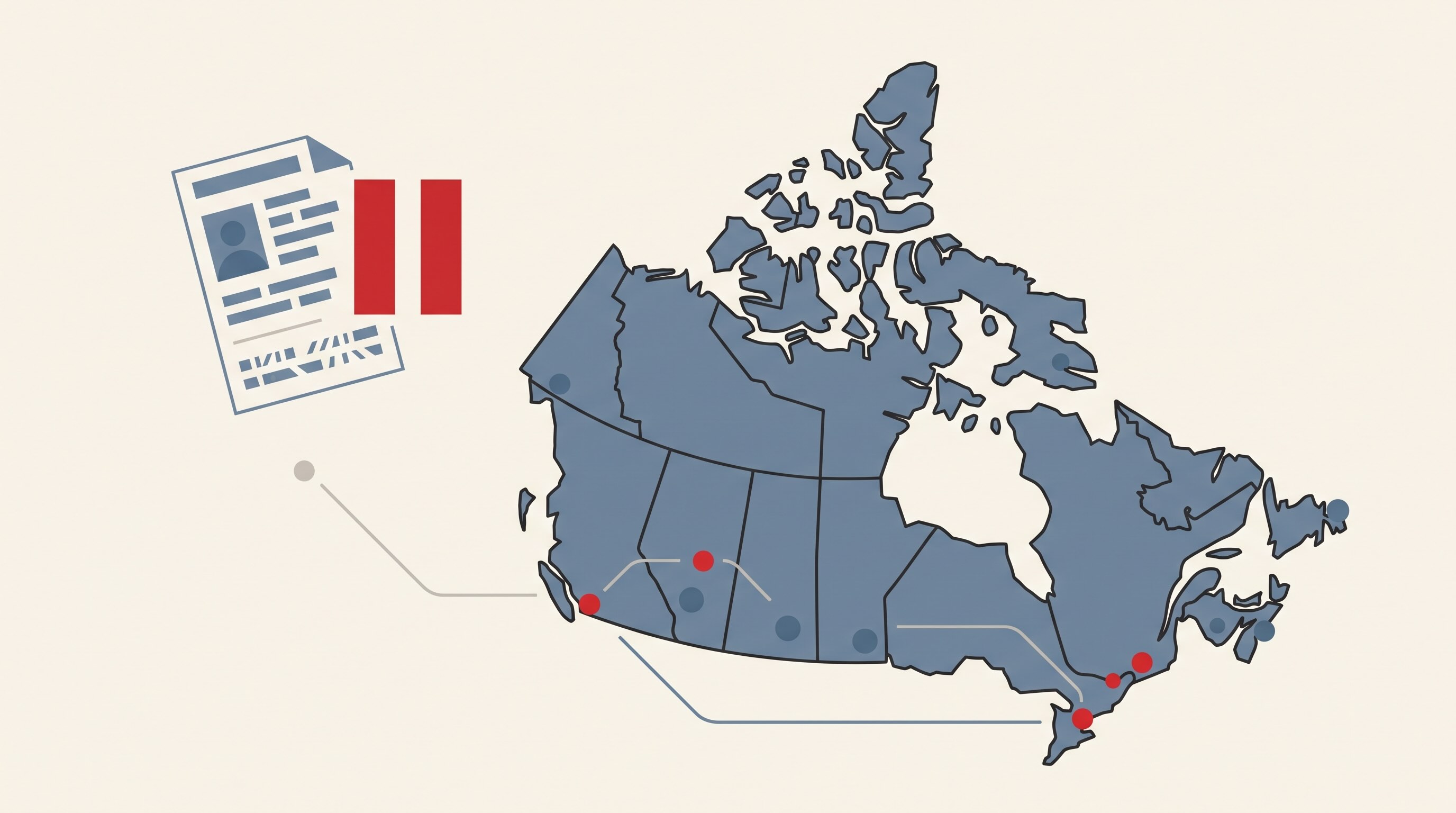
Geographically, the initiative explicitly excludes three of the province's more urbanized areas — the Central Okanagan, Metro Vancouver and the Capital Regional District — although several islands within the Capital Regional District (Galiano, Mayne, Pender, Salt Spring and Saturna) remain eligible, reflecting the program's "rural and remote" focus.
A BC PNP overhaul under the "Look West" strategy
The temporary initiative is one of the follow-on actions stemming from the comprehensive BC PNP overhaul that took effect on April 23, 2026. The restructured program supports the province's "Look West" economic strategy and reselects talent around three objectives: "Care," to strengthen health care and other services within the care economy; "Build," to support the delivery of infrastructure and major projects; and "Innovate," to advance long-term economic growth. The rural health support initiative falls under the "Care" objective.
The BC PNP runs two main channels — Skills Immigration and Express Entry BC — using a points-based registration system: candidates first create a profile, receive a registration score, enter a pool, and are then invited in periodic draws if they rank highly and meet the criteria. Health talent has long been a provincial priority. According to official figures, since 2022 B.C. has nominated 3,887 health professionals, including 475 doctors and 1,228 nurses and nurse practitioners, alongside 2,957 licensed child-care workers and 826 construction and trades workers. Under the new "Care" objective, the province is further targeting 36 in-demand occupations across health, education, child care and veterinary care.
Tight allocations: 250 spaces reflect a policy trade-off
To understand why B.C. would carve out 250 spaces for what looks like a niche group, it helps to step back to the volatile provincial-nomination landscape of the past two years. In early 2025, the federal government cut national Provincial Nominee Program (PNP) allocations by roughly half from the prior year, and B.C.'s allocation plunged from 8,000 in 2024 to 4,000 at the start of 2025 — far below the 11,000 the province had requested. Ottawa later topped up the figure twice, lifting B.C.'s 2025 allocation to 6,214; but the initial 2026 allocation announced in December 2025 came in at 5,254 — not only below the 6,214 the province ended 2025 with, but also more than 40 percent short of the 9,000 B.C. had requested for 2026.
With allocations stretched thin, B.C. sharply tightened intake in 2025, reserving its limited spaces for health-care workers and a small number of high-economic-impact candidates while pausing many of its routine draws. The 250-space temporary initiative is equivalent to roughly 4.8 percent of the province's initial 2026 allocation of 5,254 — small in scale, yet a clear signal that B.C. intends to keep its rural health-services staffing chain intact even when nominations are tight. At the federal level, the 2026–2028 Immigration Levels Plan has raised the national PNP admissions target from 55,000 in 2025 to 91,500 in 2026, an increase of about 66 percent widely read as a rebound for the PNP — though whether B.C.'s actual allocation will rise in step still depends on its continuing negotiations with Ottawa.
Rural health under strain: why retention is urgent
B.C.'s move comes against the reality of a rural and remote health system under sustained strain. The BC Rural Health Network counted close to 200 temporary rural emergency-room closures across the province in 2025; the Ambulance Paramedics of BC put the full-year figure higher still, at more than 250 temporary closures, the vast majority of them in rural areas. Staffing shortages are the core driver of these repeated shutdowns, and keeping a remote hospital running depends not only on doctors and nurses but equally on support roles such as cleaning, disinfection and security. Some observers argue that it is precisely this interlocking dependence on staff that prompted B.C. to bring support workers into the scope of its retention efforts, lest the loss of auxiliary staff drag down an already fragile rural health service.
Key dates
For eligible workers already on the job, the initiative offers a time-limited route to permanent residence (PR) — but the window is tight: registration opened on June 15, 2026, and closes at 11:59 pm on August 31, 2026, with the first invitations to be issued within weeks. Given that only 250 spaces are available and that selection is merit-based rather than first-come, first-served, interested applicants should check their eligibility against the official Skills Immigration Program Guide as early as possible and assemble supporting documents — such as proof of their employer's job offer and records of hours worked — so as not to miss the brief window.