The best is yet to come
OK
Log out of UNA?
Log out
Cancel
Get Personalized Immigration Plans in 5 Minutes
My Appointments
Welcome to UNA
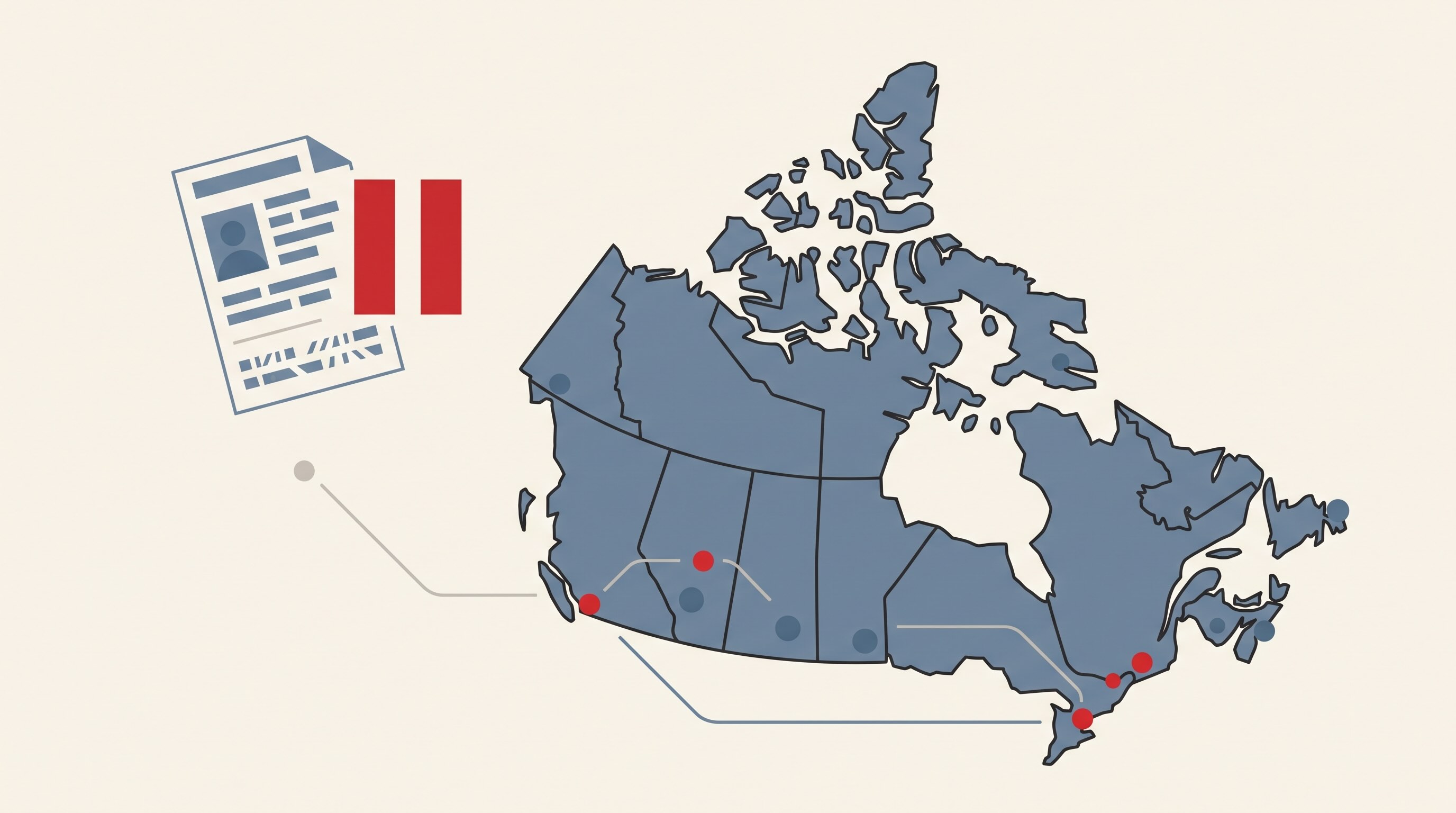
Deep Dive: How to Accurately Select Your NOC Code for Canadian Immigration in 2026

For thousands of applicants planning to apply for permanent residence through the "Express Entry" system, the National Occupational Classification (NOC) code is more than just a five-digit number; it is the cornerstone of their eligibility. Canadian immigration lawyers and industry experts have recently reiterated that in the 2026 immigration climate, accurately matching one’s NOC code is critical.

The Applicant’s Core Mission: Declaration and Proof

In major immigration streams such as the Federal Skilled Worker Program (FSWP) and the Canadian Experience Class (CEC), applicants must accomplish two equally important tasks regarding their NOC:

  1. Accurate Selection: Pick and declare the NOC code that most closely matches their actual work experience.
  2. Substantial Proof: Demonstrate, through supporting documents (such as employer reference letters), that they performed the role and duties associated with the claimed NOC.

If an applicant selects the correct NOC but fails to demonstrate the work performed, or demonstrates the work but selects the wrong NOC, the experience may be deemed ineligible, leading to a refusal.

The Weight of the 5-Digit Code

For immigration purposes, IRCC uses the 5-digit NOC code attached to a work experience to determine its validity. This code dictates:

  • Whether the work experience is considered "skilled."
  • Whether the applicant meets the eligibility threshold for programs like FSWP or CEC.
  • Whether the experience can be used to claim Comprehensive Ranking System (CRS) points in Express Entry.

Crucially, if the actual duties do not sufficiently match the chosen NOC, or if an immigration officer determines a more suitable code exists, IRCC may exclude the experience entirely, even if the job was paid and appears skilled on paper.

IRCC’s Assessment Criteria: Duties Outweigh Titles

When assessing Express Entry applications, immigration officers primarily consider whether the applicant performed the actions described in the "Lead Statement" of the NOC description and whether they executed a "substantial number" of the main duties. In practice, "substantial" is generally quantified as approximately 70% to 80% alignment, and must include the duties that define the core of the occupation.

Other sections of the NOC description, such as example job titles and employment requirements, provide context for the processing officer but do not determine eligibility on their own.

The assessment framework varies slightly by program:

  • Federal Skilled Worker Program (FSWP): Officers assess whether the Lead Statement and Main Duties are met. Employment requirements are generally not assessed for eligibility purposes.
  • Canadian Experience Class (CEC): Uses a similar framework but with a stricter requirement. Applicants must have performed all essential duties of the occupation during their Canadian work experience. While the NOC does not explicitly label which duties are "essential," officers identify them by looking for responsibilities that are central to the role, closely tied to the Lead Statement, and distinguish the occupation from similar NOCs. Typically, duties listed near the top of the description reflect the core responsibilities and must align closely.

A Practical Guide to Choosing the Right NOC in 2026

While the official NOC Finder tool is a useful starting point, it does not make the final decision for the applicant. Experts advise following a rigorous step-by-step approach:

  1. Start with Actual Duties: Before searching for a code, write out your day-to-day activities. Focus on your core responsibilities rather than your job title. Do not rush this exercise.
  2. Generate Options: Use the NOC Finder tool, searching by job title and key terms drawn from your written duties, to generate a list of potential NOC codes.
  3. Review Individually: Do not compare codes side-by-side initially; review each potential NOC one at a time.
  4. Check the Lead Statement First: If the Lead Statement does not clearly reflect the essence of your role or the organization you work for, move on to the next code immediately.
  5. Compare Duties Carefully: Compare your responsibilities to the listed duties, aiming for approximately 70–80% alignment, with particular emphasis on duties listed near the top.
  6. Confirm Essential Duties: Ensure you performed all essential duties, as these define the role for immigration purposes.
  7. Sanity Check with Titles and Requirements: Use listed job titles and employment requirements only as a secondary check, not as the basis for your decision.
  8. Review Exclusions: Always check the "Exclusions" section of each NOC to see if another listed occupation more accurately reflects your work experience.

Expert Tip

For applicants seeking additional reference material, the 2016 NOC codes included a "Career Handbook" which offered real-life applications of roles. However, experts warn that this should be used with caution and only as a reference point, as the 2021 NOC codes introduced significant shifts, and the 2016 data is no longer the standard.

Ultimately, if an applicant’s experience aligns with more than one NOC, they should select the one that best reflects their primary duties. Applicants should avoid choosing a NOC simply because it appears advantageous for points. If a NOC feels like a stretch, an IRCC officer is likely to reach the same conclusion. Every NOC selected must be supported by solid documentation, ensuring the employer is willing and able to confirm those duties in a reference letter.

Friendly reminder: There are many pathways to immigrate to Canada. We recommend first using UNA AI to generate an objective and neutral immigration plan, so you can gain an initial understanding of the possible immigration pathways and their requirements, and then choose to proceed with one-on-one consultations with a licensed Canadian immigration consultant partnered with UNA.
加拿大低工资LMIA冻结范围再调整:哈利法克斯等六地新增受限,受影响都会区增至30个
Low-wage LMIA freeze expands to 30 regions as Halifax, Regina and four other CMAs are added
The federal government updated its list of regions where low-wage Labour Market Impact Assessment (LMIA) applications will not be processed on Oct. 9, 2026, adding six census metropolitan areas (CMAs) - Halifax, Fredericton, Kingston, St. Catharines-Niagara, Regina and Lethbridge - after their unemployment rates reached or exceeded 6%, while removing Kamloops and Chilliwack and keeping the 24 previously affected regions in place, which brings the total to 30, up from 26 last quarter. From Oct. 9, 2026 to Jan. 7, 2027, employers in these areas cannot hire new foreign workers, or renew work permits for existing ones, in non-exempt positions paying less than 120% of the provincial or territorial median hourly wage, although agriculture, construction, food manufacturing, hospitals and nursing care facilities are not affected. The measure, in force since Sept. 26, 2024, is one of a series of steps Ottawa has taken to tighten the Temporary Foreign Worker Program (TFWP), and Immigration, Refugees and Citizenship Canada (IRCC) separately extended its concurrent processing window from 60 to 90 days on Aug. 21, 2026, giving foreign workers in Canada with expiring permits more breathing room.
10/10/2026
联邦拨款2,000万加元扩容安省PRO项目,最多200名国际受训家庭医生将提速取得执照
Ottawa Commits $20 Million to Expand Practice Ready Ontario, Fast-Tracking Up to 200 Internationally Trained Family Physicians
On October 7, 2026, the federal government announced $20 million to expand Practice Ready Ontario (PRO), adding 50 positions a year for four years so that up to 200 internationally trained family physicians can be ready to practise in Ontario by 2028–29, including through a dedicated stream for French-speaking physicians and with a focus on underserved northern, rural and Francophone communities. PRO replaces the traditional two-year residency with a 12-week clinical field assessment, allowing experienced doctors to become licensed in under a year rather than the three to five years typical of other routes. Participants sign a three-year return of service agreement and practise under supervision, earning full independent licensure only after completing that commitment and passing the College of Family Physicians of Canada (CFPC) certification exam. The funding is the latest step in a coordinated federal-provincial push on health workforce shortages: Ottawa has already invited 891 physicians to apply for permanent residence in 2026 through a dedicated Express Entry category, and Ontario now lets doctors and nurses licensed elsewhere in Canada start work within days.
10/09/2026
加拿大移民部更新工作邀请真实性审查指引 居家经营企业可为外籍员工提供雇主指定工签工作邀请
IRCC Updates Job Offer Genuineness Guidance: Home-Based Businesses Can Support Employer-Specific Work Permits
Immigration, Refugees and Citizenship Canada (IRCC) revised its officer instructions on assessing the genuineness of job offers for employer-specific work permits on September 17, 2026, confirming that home-based businesses can make genuine offers to foreign workers and that a residential address is not, on its own, a reason for doubt. The revised guidance no longer says employers must have a physical location in Canada where the foreign worker will work, and it notes that a business address may differ from where employees actually work. Officers are told to consider all relevant evidence rather than treat any single factor as decisive. At the same time, the instructions state that a company with no employees, existing in name only and set up to facilitate the entry of foreign nationals, is not an operating business. The update also adds a procedural fairness step: an officer with concerns about an offer should send a letter explaining them, and the employer is given 15 days to submit evidence directly to IRCC. Employers must still show that they genuinely conduct business, need the worker they want to hire and can meet the wages and other terms they have offered.
10/08/2026
安大略省提名计划上调收入评分上限:年收入达8万加元可获10分
Ontario Raises Earnings Points Ceiling, Awarding 10 Points to Candidates Earning $80,000 or More
The Ontario Immigrant Nominee Program (OINP) announced on Oct. 7, 2026, that it has added a new top bracket to the scoring grid of the Ontario Workforce Priority Stream (OWPS), awarding 10 points under the "Canadian work experience: earnings history" factor to candidates with annual earnings of $80,000 or more, two points above the previous maximum of 8 points for earnings of $70,000 or more. The change took effect on Oct. 5 and has been applied automatically to affected profiles. Earnings are based on a Notice of Assessment issued by the Canada Revenue Agency (CRA) within the past five years, and higher-scoring candidates stand a better chance of being invited to apply for provincial nomination. Launched on June 26 and opened for intake on Aug. 4, the OWPS is currently Ontario's only provincial nomination route to permanent residence for foreign nationals, while a second phase of the overhaul, adding Priority Healthcare, Entrepreneur and Exceptional Talent streams, still has no launch date.
10/08/2026
BC省第二轮偏远医疗支持抽签发出33份邀请,分数线抬高至60分
B.C. issues 33 invitations in second rural health support draw as cutoff climbs to 60
On Sept 17, 2026, the British Columbia (B.C.) Provincial Nominee Program (BCPNP) held the second draw under its Temporary Rural/Remote Health Support Initiative (TRHSI), issuing 33 invitations to apply for provincial nomination to cleaning and security staff employed by a public health authority in a rural or remote part of the province, with a minimum score of 60 — 10 points above the 50-point cutoff used in the first draw on July 23, 2026 — while the number of invitations fell from 60 to 33, bringing the two-draw total to 93 invitations to apply (ITAs), or roughly 37% of the initiative's cap of 250 nominations. TRHSI is a one-time, time-limited permanent residence (PR) pathway launched when B.C. restructured its nominee program on April 23, 2026; registration opened June 15, 2026, and eligibility is confined to three National Occupational Classification (NOC) codes — 65312, 65310 and 64410 — with applicants required to have completed nine months of continuous full-time work with the same employer, in the same eligible region and in the same occupation. The registration window was originally set to close at midnight on Aug 31 but was extended to 11:59 p.m. on Oct 7, 2026 because of wildfire-related impacts. The wider context is that B.C.'s 2026 nomination allocation rose to 6,254 after the federal government added 1,000 spaces in August, with at least 35% of nominations required to go to candidates outside Metro Vancouver; and that since June 9, 2026, base Provincial Nominee Program (PNP) nominees applying for PR no longer need to wait for an Acknowledgement of Receipt (AOR) before applying for a Bridging Open Work Permit (BOWP) — a federal temporary measure running to Dec 31, 2026 that matters especially to TRHSI applicants, who have no Express Entry-aligned option.
09/20/2026
加拿大快速通道连续两日抽签:CEC分数线回落至519分,高管类别门槛创设立以来新低
Canada holds back-to-back Express Entry draws: CEC cut-off eases to 519, while the senior managers category sets a record low
Immigration, Refugees and Citizenship Canada (IRCC) held Express Entry draws on two consecutive days, September 15 and 16, 2026, issuing invitations to apply (ITAs) to two very different groups of candidates. Round #443, conducted on September 15 at 10:21:41 UTC, issued 2,000 invitations under the Canadian Experience Class (CEC) with a minimum Comprehensive Ranking System (CRS) score of 519 and a tie-breaking rule of March 26, 2026 at 00:16:39 UTC; round #444, held the following day at 12:44:28 UTC, issued 250 invitations under the category for senior managers with Canadian work experience at a minimum CRS score of just 389, with a tie-breaking rule of September 1, 2026 at 23:05:13 UTC. Both rounds were authorized by ministerial instructions signed in Ottawa by Immigration Minister Lena Metlege Diab under the Immigration and Refugee Protection Act (IRPA). The senior managers category, created in February 2026, has now run three draws, with the cut-off falling from 429 in its first round to 392 and then 389 -- a cumulative drop of 40 points and the lowest threshold in the category's short history. Over the same period, the CEC cut-off has declined for a third consecutive round after peaking at a 2026 high of 523 on August 18. Through round #444, IRCC has held 56 draws and issued 128,982 invitations in 2026, an annual record since Express Entry was launched.
09/18/2026
加拿大快速通道第442轮省提名抽签发出576份邀请,分数线回升至734分
Express Entry round #442 issues 576 PNP invitations as the cut-off climbs back to 734
Immigration, Refugees and Citizenship Canada (IRCC) held the 442nd Express Entry round on September 14, 2026, issuing 576 invitations to apply (ITAs) for permanent residence to candidates in the Provincial Nominee Program (PNP) category with a minimum Comprehensive Ranking System (CRS) score of 734, up 37 points from the 697 recorded on August 31, the lowest PNP cut-off of the year, while the size of the round edged past the 562 invitations issued two weeks earlier to make it the second-largest PNP round since June 22. The ministerial instruction behind the round was signed in Ottawa by Immigration Minister Lena Metlege Diab, and the tie-breaking rule was set at 21:39:50 UTC on August 29, 2026, barely two weeks before the draw itself, a sign that a substantial share of the candidates sitting exactly at 734 were recently nominated applicants who had only just entered the pool. With this round, IRCC has held 54 Express Entry draws in 2026 and issued 126,732 invitations in total, including 18 PNP rounds accounting for 8,537 invitations, 22.8 percent more than the 6,947 issued over the same period in 2025 and consistent with Ottawa's decision to restore the 2026 provincial nominee admissions target to 91,500. A pool snapshot published the day before the draw showed 226,793 candidates in the pool, of whom roughly 574 scored 601 or higher, almost exactly matching the 576 invitations issued, which means IRCC once again cleared out nearly the entire top tier of nominated candidates in a single round. Analysts expect the remaining PNP rounds this year to keep to a roughly biweekly rhythm of a little over 400 invitations each, with the cut-off driven largely by how quickly the provinces feed new nominations into the federal pool.
09/15/2026
纽芬兰与拉布拉多省9月10日仅发出36份省提名邀请,创年内单轮最低
Newfoundland and Labrador issues just 36 provincial nomination invitations on September 10, the smallest round of the year
On September 10, 2026, the Newfoundland and Labrador Office of Immigration and Multiculturalism (OIM) invited 36 candidates to apply for a provincial nomination through the Newfoundland and Labrador Provincial Nominee Program (NLPNP) — the province's 14th draw of the year, its smallest round of 2026, and the third round since the Expression of Interest (EOI) model launched in February 2025 in which no Atlantic Immigration Program (AIP) candidate received an invitation, the second such round in a row. The province has now issued 2,592 invitations in 2026, comprising 2,198 through the NLPNP and 394 through the AIP; by comparison, Newfoundland and Labrador issued 3,376 invitations across 13 rounds in all of 2025, meaning that this year's total is 784 lower despite one additional draw, with round sizes contracting steadily since mid-August. The province has still not published its 2026 nomination allocation, and industry media have suggested that the recent pattern of small, frequent draws may reflect a limited pool of remaining spaces, though the province has offered no explanation. For those invited, a federal temporary measure in effect since June 9 allows provincial nominees applying for permanent residence (PR) from inside Canada to apply for a Bridging Open Work Permit (BOWP) before receiving an Acknowledgement of Receipt (AOR), helping them avoid a gap in status during a base provincial nominee processing cycle that currently runs about 13 months.
09/14/2026
阿尔伯塔省9月初三轮省提名抽签发出722份邀请,科技与医疗专场分数线均为60分
Alberta Issues 722 Invitations Across Three Early-September Draws, With Tech and Health Care Rounds Both Cutting Off at 60
The Alberta Advantage Immigration Program (AAIP) held three draws between September 1 and September 9, 2026, all aimed at candidates holding an Alberta job offer, issuing a combined 722 invitations to apply for a provincial nomination: on September 1, the Alberta Opportunity Stream invited 575 candidates with a minimum score of 56; on September 3, the Alberta Express Entry Stream – Accelerated Tech Pathway invited 96 tech workers with a minimum score of 60; and on September 9, the Dedicated Health Care Pathway – Express Entry invited 51 health care workers, also at a minimum score of 60. Invited candidates have a set window in which to submit a provincial nomination application, and once nominated they apply to the federal government for permanent residence (PR), with those already in Canada able to apply for a Bridging Open Work Permit (BOWP) while they wait; under Operational Bulletin 699, which Immigration, Refugees and Citizenship Canada (IRCC) issued and brought into force on June 9, 2026, in-Canada provincial nominees who have not yet received an Acknowledgement of Receipt (AOR) for their PR application may apply for a BOWP on the strength of their submission confirmation email and proof of payment, a measure that runs until December 31, 2026. As of September 9, Alberta had issued 4,864 nominations this year, roughly 74 percent of its full-year allocation of 6,603, leaving 1,739 spots; the Worker Expression of Interest pool still held 35,957 active profiles, of which the Alberta Opportunity Stream alone accounted for 22,381 against just 837 remaining nominations in that stream, so competition remains intense. Health care and technology are both among Alberta's designated priority sectors for 2026, alongside construction, aviation, agriculture and manufacturing.
09/12/2026
加拿大恢复工签持有人免学签就读政策,有效期至2027年底
Canada Restores Study-Permit Exemption for Work Permit Holders, in Force Until the End of 2027
Immigration, Refugees and Citizenship Canada (IRCC) announced a temporary public policy on September 9, 2026 that allows foreign nationals holding a valid work permit to enrol in a course of six months or less without applying for a study permit, even if the course ends after the period of stay authorized on their first entry to Canada. Signed by Minister of Citizenship and Immigration Lena Metlege Diab on August 5, the policy took effect on September 4, runs until December 31, 2027, and may be revoked at any time. It revives a measure of the same name introduced in June 2023 that expired on June 27 of this year, but with a narrower reach: the earlier policy let eligible workers, including those on maintained status, study programs of any length without a study permit, whereas the new one requires applicants to hold a valid work permit and waives only the requirement that a course be completed within the initial authorized period of stay. As of June 30, 2026, roughly 1.55 million foreign nationals in Canada held a work permit only, and about 630,000 held a study permit. IRCC says the measure is intended to help workers already in the country, such as tradespeople, nurses and laboratory technicians, upgrade their skills and credentials to fill gaps in critical sectors, and that it does not change the government's overall target of reducing temporary residents to less than 5 percent of the population.
09/10/2026
Sorry, your request failed
Please try again
OK