The best is yet to come
OK
Log out of UNA?
Log out
Cancel
Get Personalized Immigration Plans in 5 Minutes
My Appointments
Welcome to UNA
Start up Visa has encouraged immigrants in the US to move to Canada

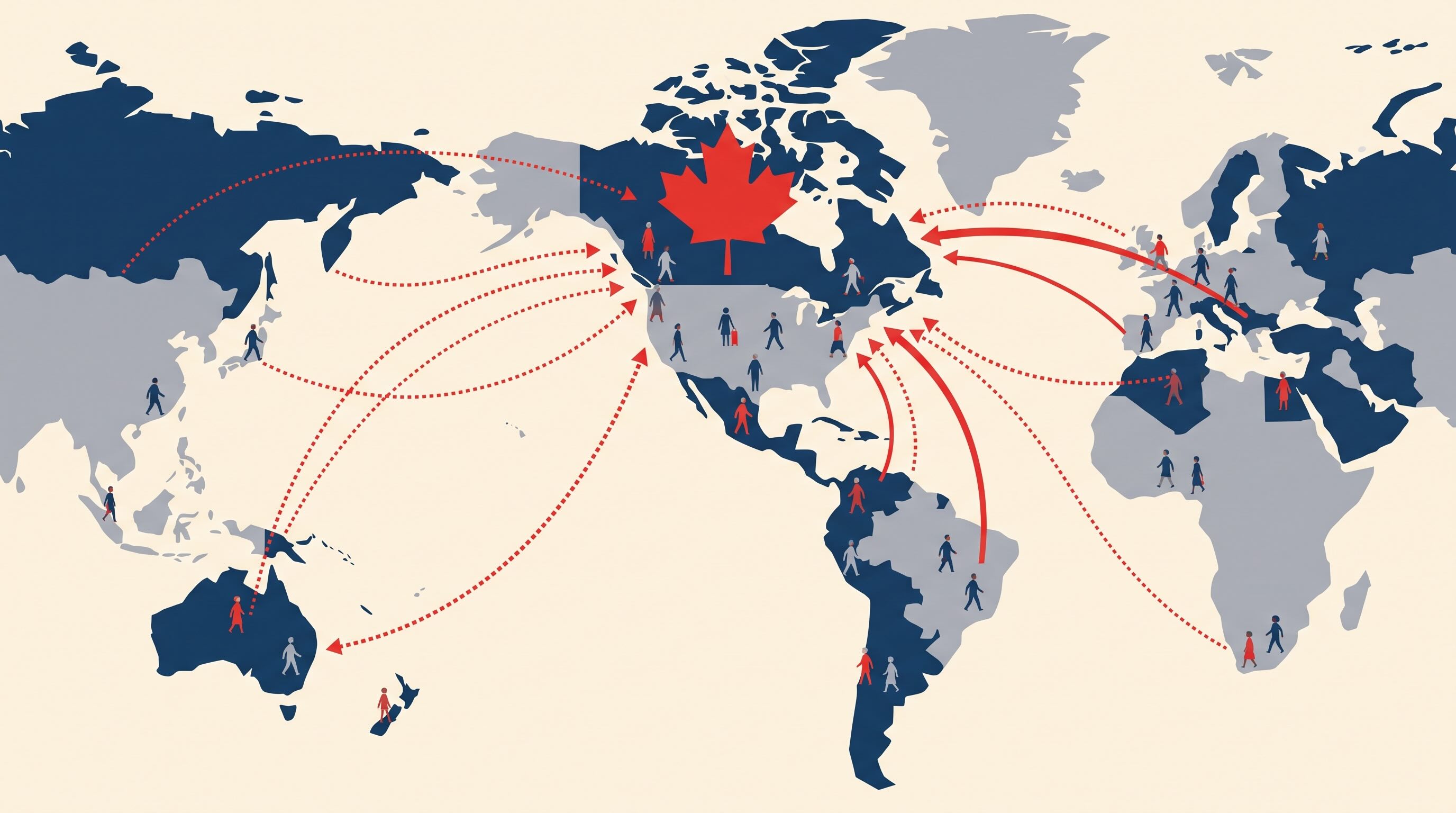
New research has shown that Canada’s Start up Visa policy has encouraged immigrants in the United States to move to Canada.

This research is in line with the implementation of Canada’s program to entice H-1B visa holders in the US to come to Canada, which attracted so many applications it reached the 10,000 limit in less than 48 hours.

A new study by Saerom Lee and Britta Glennon from the Wharton School at the University of Pennsylvania investigated whether immigration policies that provide visas to skilled entrepreneurs influence the founding location choice of immigrant entrepreneurs.

The study found that the introduction of Canada’s Start up Visa Program in 2013 increased the likelihood that US based immigrants have a start-up in Canada by 69%.

The study used a dataset of 1.2 million US based individuals who “founded a company either in the US or Canada between 2006 and 2021.”

The research also found that immigrants to the US from Asian countries were the most likely to start a business in Canada. “Our study also finds that, compared to immigrants of other ethnic groups, Asian immigrants were more responsive to this policy change,” write the authors. “Furthermore, our results suggest this responsiveness varies by the presence of Asian immigrants in their prior location. That is, the larger the Asian immigrant enclaves in the origin location, the less likely that U.S.-based Asian immigrants in this location move to Canada to start a business.”

They conclude by discussing how not only does immigration policy impact the founding location decisions of immigrant entrepreneurs, but that this decision also involves weighing factors like social ties and the presence of co-ethnic communities in both origin and destination locations.

Who is eligible for the Start up Visa?

The purpose of this program is to recruit foreign national entrepreneurs who will create new jobs and drive economic growth in Canada.

In order to be eligible, applicants for a Start-Up Visa must meet the following requirements:

  • Meet minimum language requirements in English or French (CLB 5 in all abilities);
  • Have sufficient funds to settle in Canada;
  • Plan to settle in a province other than the Province of Quebec;
  • Pass Canadian security and medical clearances;
  • Prove your business is supported through a designated organization; and
  • Show your business meets ownership requirements.

Immigration, Refugees and Citizenship Canada (IRCC) has designated a number of venture capital funds, angel investor groups, and business incubator organizations that participate in the Start-Up Visa program.

Successful applicants are required to secure a minimum investment for their start-up. If coming from a designated Canadian venture capital fund, the investment must be at least $200,000. If coming from an angel investor group, it should be at least $75,000.

Applicants are not required to invest any of their own money. If their Canadian start-up is unsuccessful, individuals given permanent residence through this program retain their permanent resident status.


Source:  https://www.cicnews.com/2023/12/start-up-visa-has-encouraged-immigrants-in-the-us-to-move-to-canada-1240108.html#gs.1uqkdn

Friendly reminder: There are many pathways to immigrate to Canada. We recommend first using UNA AI to generate an objective and neutral immigration plan, so you can gain an initial understanding of the possible immigration pathways and their requirements, and then choose to proceed with one-on-one consultations with a licensed Canadian immigration consultant partnered with UNA.
安省重启REDI区域移民试点 六个北部与乡村社区获专属省提名名额
Ontario relaunches REDI regional immigration pilot, reserving nomination spaces for six northern and rural communities
The Ontario government confirmed on Oct. 16, 2026, through the program-updates page of the Ontario Immigrant Nominee Program (OINP), that a new round of the Regional Economic Development through Immigration (REDI) initiative is underway. Greater Sudbury, Kenora District, Nipissing District, Rainy River District, Renfrew County and Thunder Bay have been named as partner communities and will receive dedicated provincial nomination spaces, with the initiative running to the end of 2027. It is the latest adjustment to a program that began in 2020 as a three-community pilot and was formally expanded in January 2025, but only Thunder Bay carries over from the previous list; the other five are taking part for the first time. Allocations per community, draw dates and occupation lists have not been published. With the eight former streams revoked on June 25, 2026, and the new Ontario Workforce Priority Stream (OWPS) yet to hold a single draw since opening its Expression of Interest system on Aug. 4, REDI is now one of the few parts of Ontario's nomination system that is both operational and explicitly regional.
10/20/2026
加拿大快速通道11月3日启用「高薪加分」:186个职业可获最高100分工作邀请加分,LMIA要求同日取消
Express Entry to award up to 150 points for high-wage jobs and Canadian work experience from November 3
Immigration, Refugees and Citizenship Canada (IRCC) announced on October 16, 2026 that the Comprehensive Ranking System (CRS) will gain a Labour Market Integration factor (LMIF) from November 3, awarding points for a qualifying job offer or Canadian work experience in 186 high-wage occupations. The job-offer route is worth 100 points in the top tier, 70 in the second and 50 in the third, while the work-experience route adds a high-wage bonus of up to 70 points to the existing Canadian work-experience score, lifting that component to a maximum of 150 points, or 140 for candidates with a spouse or common-law partner. Candidates receive the higher of the two amounts and never both, so someone with five years of Canadian experience in a top-tier occupation and no accompanying spouse can reach 150, against 100 for a top-tier job offer alone. The 186 occupations are divided into 31 in the 2x tier, 89 in the 1.5x tier and 66 in the 1.3x tier, based on 2023 to 2025 labour market data. The same date removes the LMIA requirement for Express Entry job offers, although IRCC says holding an LMIA will add no points and confer no priority. The minister, Lena Metlege Diab, announced the measures in Kitchener, Ontario. IRCC will recalculate roughly 229,000 profiles in the pool and pause all draws for up to two weeks, and applications already invited will be assessed against the list in force on the date of the invitation to apply (ITA).
10/19/2026
加拿大快速通道连续两日发出7,500份邀请,法语类别占三分之二且分数线创年内新高
Express Entry Issues 7,500 Invitations Over Two Consecutive Days as French-Language Category Accounts for Two-Thirds and Hits 2026 Cut-Off High
Immigration, Refugees and Citizenship Canada (IRCC) held back-to-back Express Entry draws on October 15 and 16, 2026 (Rounds #449 and #450), issuing a combined 7,500 Invitations to Apply (ITAs) for permanent residence (PR). On October 15, the Canadian Experience Class (CEC) draw issued 2,500 invitations, a 25% increase over the previous CEC round, while the minimum Comprehensive Ranking System (CRS) cut-off score edged up by 1 point to 519. On October 16, the French-language proficiency category draw issued 5,000 invitations, accounting for approximately 66.7% of the two-day total; following a nearly two-month hiatus without a draw in this category, the minimum CRS score jumped by 53 points from the previous round to 435, setting a 2026 high for the category while still remaining 84 points below the concurrent CEC threshold. Combined with the Provincial Nominee Program (PNP) draw held earlier the same week on October 13, IRCC noticeably accelerated its invitation pace ahead of the November 3 CRS scoring overhaul and system pause, issuing a cumulative 8,252 invitations across four days.
10/17/2026
卑诗省向护理及建筑行业发出至少284份省提名邀请
British Columbia issues at least 284 provincial nomination invitations to care and construction workers
The British Columbia Provincial Nominee Program (BCPNP) issued at least 284 invitations to apply for provincial nomination on October 8, 2026, targeting candidates in health care, construction trades, childcare and veterinary care. Construction trades received the largest number of invitations, at 115, while health care had a minimum score of 76. Compared with the previous selection for these occupations on September 10, the thresholds for health care, construction and childcare remained unchanged, while veterinary care fell from 90 to 86 points. With this round, British Columbia had issued at least 6301 Skills Immigration invitations this year, continuing to select talent in line with its Care, Build and Innovate priorities.
10/15/2026
快速通道省提名专场发出752份邀请,最低分数线升至772分
Express Entry PNP draw invites 752 candidates as cut-off climbs to 772
Immigration, Refugees and Citizenship Canada (IRCC) held Express Entry round #448 on October 13, 2026, a Provincial Nominee Program (PNP) draw that issued invitations to apply (ITAs) for permanent residence to 752 candidates holding a provincial nomination. The lowest-ranked invited candidate had a Comprehensive Ranking System (CRS) score of 772, and the tie-breaking rule was set at July 15, 2026 at 13:57:33. The round was the second-largest of the 20 PNP draws held this year, behind only the 955 invitations issued on June 22. The cut-off was 47 points higher than the 725 recorded in the previous PNP draw on September 28, and the highest for a PNP round since May 25, when it reached 805. Including this round, PNP draws have issued 10,022 invitations in 2026, out of 135,967 issued across all Express Entry draws this year.
10/14/2026
加拿大2026年1至7月永久居民获批人数同比下降9.7%,各国籍增减分化明显
Canada's Permanent Resident Grants Fall 9.7% in First Seven Months of 2026 as Citizenship Mix Shifts
Canada granted permanent resident status to 222,625 people between January and July 2026, according to country-of-citizenship data from Immigration, Refugees and Citizenship Canada (IRCC). That is 23,955 fewer than the 246,580 recorded over the same months of 2025, a year-over-year drop of 9.7%, although the pace of decline has eased since the first half of the year. Beneath the national contraction, outcomes diverged sharply by citizenship. PRs granted to Indian citizens fell by 15,405, a figure equal to 64.3% of the entire national reduction, even as India remained by far the largest country of citizenship. Turkish-citizen PRs jumped 185.2%, and Iran, Nigeria, Sudan, Syria, Uganda and Mexico also recorded strong gains, while France, Eritrea and several North African countries saw steep declines. The Philippines and Pakistan lost a little volume but gained share. The figures describe outcomes only; they are not country quotas and do not change any applicant's eligibility.
10/13/2026
纽芬兰与拉布拉多省10月9日发出131份邀请函,单轮规模为8月下旬以来最大
Newfoundland and Labrador Issues 131 Invitations on October 9, Its Largest Round Since Late August
Newfoundland and Labrador issued 131 Invitations to Apply (ITAs) from its Expression of Interest (EOI) pool on October 9, 2026, with 130 going to candidates under the Newfoundland and Labrador Provincial Nominee Program (NLPNP) and one through the Atlantic Immigration Program (AIP). The round, the province's first in two weeks and its first of October, was its largest since August 26 (140), more than triple the September 25 round (41) and bigger than all four September rounds. AIP selections remain minimal, with three of the five rounds held since the start of September including none at all. The province has now issued 2,826 ITAs across 17 rounds in 2026 — 2,430 under the NLPNP and 396 through the AIP — against a combined 2026 nomination allocation of 2,854 spaces, including an NLPNP allocation raised this year to 2,379 and an unchanged AIP allocation of 475. Candidates nominated through the NLPNP Express Entry Skilled Worker category receive an extra 600 Comprehensive Ranking System (CRS) points.
10/12/2026
加拿大低工资LMIA冻结范围再调整:哈利法克斯等六地新增受限,受影响都会区增至30个
Low-wage LMIA freeze expands to 30 regions as Halifax, Regina and four other CMAs are added
The federal government updated its list of regions where low-wage Labour Market Impact Assessment (LMIA) applications will not be processed on Oct. 9, 2026, adding six census metropolitan areas (CMAs) - Halifax, Fredericton, Kingston, St. Catharines-Niagara, Regina and Lethbridge - after their unemployment rates reached or exceeded 6%, while removing Kamloops and Chilliwack and keeping the 24 previously affected regions in place, which brings the total to 30, up from 26 last quarter. From Oct. 9, 2026 to Jan. 7, 2027, employers in these areas cannot hire new foreign workers, or renew work permits for existing ones, in non-exempt positions paying less than 120% of the provincial or territorial median hourly wage, although agriculture, construction, food manufacturing, hospitals and nursing care facilities are not affected. The measure, in force since Sept. 26, 2024, is one of a series of steps Ottawa has taken to tighten the Temporary Foreign Worker Program (TFWP), and Immigration, Refugees and Citizenship Canada (IRCC) separately extended its concurrent processing window from 60 to 90 days on Aug. 21, 2026, giving foreign workers in Canada with expiring permits more breathing room.
10/10/2026
联邦拨款2,000万加元扩容安省PRO项目,最多200名国际受训家庭医生将提速取得执照
Ottawa Commits $20 Million to Expand Practice Ready Ontario, Fast-Tracking Up to 200 Internationally Trained Family Physicians
On October 7, 2026, the federal government announced $20 million to expand Practice Ready Ontario (PRO), adding 50 positions a year for four years so that up to 200 internationally trained family physicians can be ready to practise in Ontario by 2028–29, including through a dedicated stream for French-speaking physicians and with a focus on underserved northern, rural and Francophone communities. PRO replaces the traditional two-year residency with a 12-week clinical field assessment, allowing experienced doctors to become licensed in under a year rather than the three to five years typical of other routes. Participants sign a three-year return of service agreement and practise under supervision, earning full independent licensure only after completing that commitment and passing the College of Family Physicians of Canada (CFPC) certification exam. The funding is the latest step in a coordinated federal-provincial push on health workforce shortages: Ottawa has already invited 891 physicians to apply for permanent residence in 2026 through a dedicated Express Entry category, and Ontario now lets doctors and nurses licensed elsewhere in Canada start work within days.
10/09/2026
加拿大移民部更新工作邀请真实性审查指引 居家经营企业可为外籍员工提供雇主指定工签工作邀请
IRCC Updates Job Offer Genuineness Guidance: Home-Based Businesses Can Support Employer-Specific Work Permits
Immigration, Refugees and Citizenship Canada (IRCC) revised its officer instructions on assessing the genuineness of job offers for employer-specific work permits on September 17, 2026, confirming that home-based businesses can make genuine offers to foreign workers and that a residential address is not, on its own, a reason for doubt. The revised guidance no longer says employers must have a physical location in Canada where the foreign worker will work, and it notes that a business address may differ from where employees actually work. Officers are told to consider all relevant evidence rather than treat any single factor as decisive. At the same time, the instructions state that a company with no employees, existing in name only and set up to facilitate the entry of foreign nationals, is not an operating business. The update also adds a procedural fairness step: an officer with concerns about an offer should send a letter explaining them, and the employer is given 15 days to submit evidence directly to IRCC. Employers must still show that they genuinely conduct business, need the worker they want to hire and can meet the wages and other terms they have offered.
10/08/2026
Sorry, your request failed
Please try again
OK