The best is yet to come
OK
Log out of UNA?
Log out
Cancel
Get Personalized Immigration Plans in 5 Minutes
My Appointments
Welcome to UNA
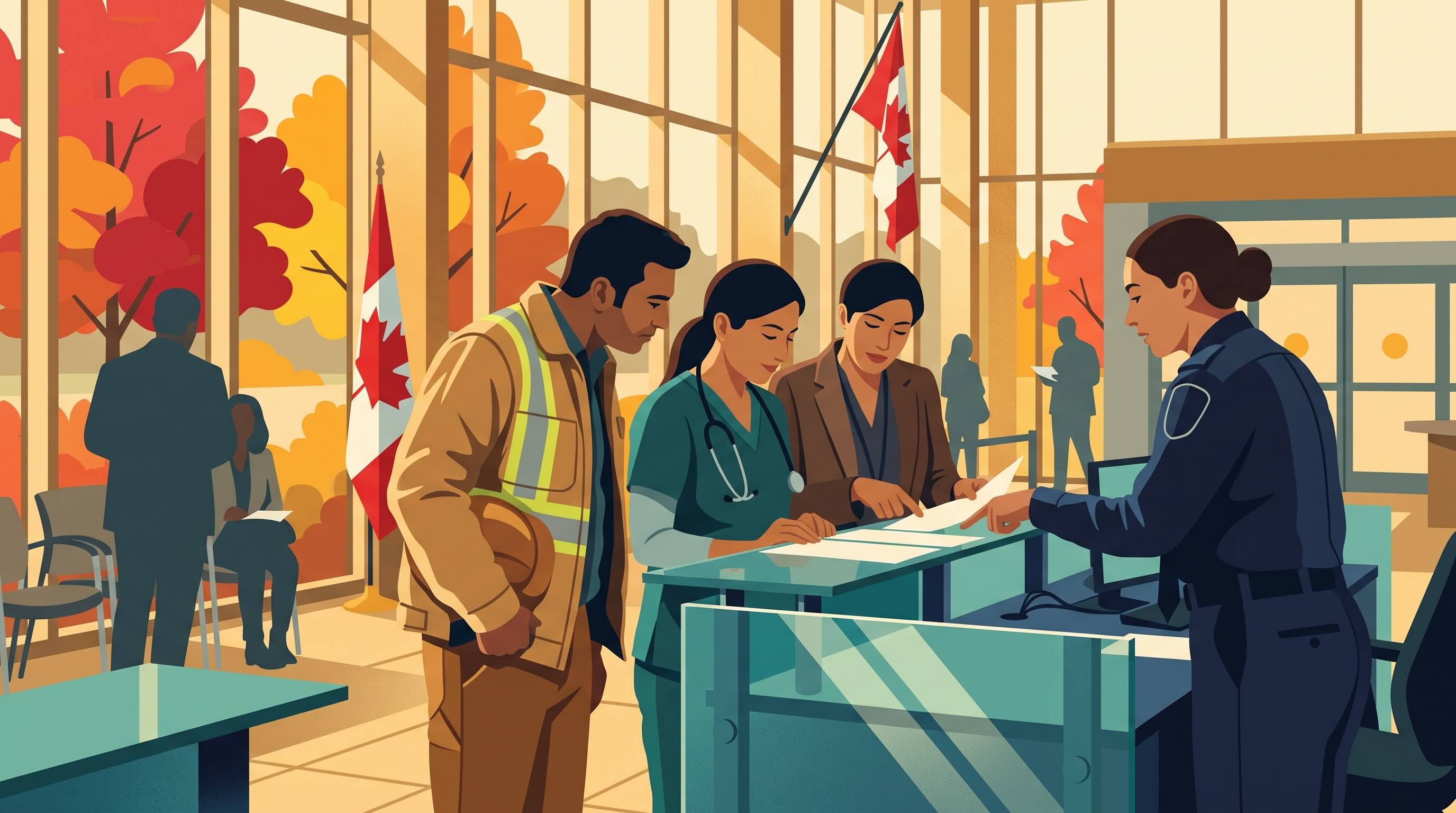
Canada Introduces New Immigration Policy for the Construction Industry: Amnesty Path for Undocumented Construction Workers, Loosening Restrictions on Apprentice Work Permits

Facing a persistent labor shortage in the construction industry and escalating pressures on housing supply, the Canadian government held a press conference on March 7, 2025, in Woodbridge, Ontario, to announce a series of new initiatives aimed at attracting more skilled workers and construction professionals. Immigration, Refugees and Citizenship Minister Marc Miller detailed the new policies, noting that these measures are a pragmatic response to the severe labor shortage in the domestic construction sector.

Key Reforms Include

  1. Reserved Immigration Spots: The government will reserve immigration spots for up to 6,000 construction workers who are working in Canada without legal status, providing them with the opportunity to transition to permanent residency. Although the specific implementation details and application criteria have not yet been disclosed, this initiative is seen as an important measure to alleviate the industry’s labor shortage.
  2. Relaxation of Apprenticeship Program Admission Requirements: Effective March 7, eligible temporary foreign workers will no longer be required to obtain a study permit to participate in apprenticeship training. Previously, foreign workers wishing to join apprenticeship programs were required to secure a study permit—a process that most such workers in Canada were not qualified for. This change will offer a more convenient pathway for workers seeking to upgrade their skills, thereby better meeting the needs of the construction industry.
  3. Establishment of an Advisory Committee: To ensure that policy development aligns with practical needs, the government will form an advisory committee composed of government officials, union representatives, and industry employers. The committee is expected to hold its first meeting next week, focusing on key issues such as wage standards and the number of foreign construction workers to be admitted. It is reported that up to 14,000 foreign construction workers may eventually enter Canada through various channels, though it remains to be clarified whether they will be admitted on a permanent or temporary basis.

Background and Context

In recent years, Canada’s construction market has faced severe challenges due to an insufficient housing supply. According to forecasts by the Canada Mortgage and Housing Corporation, an additional 6 million housing units will be needed in the coming years to ease the burden of high housing costs. However, due to a domestic shortage of skilled workers, Canada has had to rely on immigration to bring in external talent. Statistics indicate that immigrants currently make up about 23% of general contractors and residential builders in the construction sector, underscoring their vital role in the industry.

Furthermore, on February 27, 2025, the Canadian government adjusted its skilled worker immigration policy within the Express Entry system, adding 19 construction-related occupations—including construction management, cost estimating, bricklaying, roofing, flooring installation, and painting and decorating. This expansion is aimed at further attracting construction professionals with practical experience and specialized skills to promote sustainable industry development.

Continuation of Previous Policy Achievements

As early as January 2020, Canada had implemented a temporary policy for undocumented construction workers in the Greater Toronto Area, allowing them to apply for permanent residency. This policy was extended multiple times until it expired on December 31, 2024, during which approximately 1,365 workers and their families successfully transitioned their status. The current new policy builds on that experience, aiming to establish a more stable and comprehensive mechanism for integrating these workers.

Overall Housing and Immigration Strategy

In its 2025–2027 immigration levels plan, the Canadian government is also prioritizing housing supply issues. Both Prime Minister Justin Trudeau and Minister Miller have stated that by reducing the number of temporary residents, it is possible to free up as many as 670,000 housing units. Additionally, the establishment of the “Canada Focused” category is intended to give priority to applicants with Canadian work experience, thereby achieving immigration targets while alleviating pressure on the housing market. It is reported that in 2025 alone, the government plans to admit approximately 82,890 new immigrants through this pathway.

Conclusion

Canada’s new series of immigration policies targeting the construction industry not only address the long-standing labor shortage but also reflect the government’s comprehensive approach to housing and immigration policy. As further details emerge, these measures are expected to inject new vitality into Canada’s construction sector while providing more legal opportunities for foreign workers wishing to remain in the country. Further updates will be provided as more details become available.


Friendly reminder: There are many pathways to immigrate to Canada. We recommend first using UNA AI to generate an objective and neutral immigration plan, so you can gain an initial understanding of the possible immigration pathways and their requirements, and then choose to proceed with one-on-one consultations with a licensed Canadian immigration consultant partnered with UNA.
纽芬兰与拉布拉多省两轮抽签发出205份邀请,NLPNP占比约95%
Newfoundland and Labrador issues 205 invitations across two draws, with NLPNP accounting for about 95%
Newfoundland and Labrador held two provincial selection rounds on October 23 and October 29, 2026, issuing 205 invitations in total, of which 195 went to candidates through the Newfoundland and Labrador Provincial Nominee Program (NLPNP) and 10 through the Atlantic Immigration Program (AIP), leaving NLPNP with about 95% of the invitations. Invited candidates must file a complete nomination or endorsement application with the province within 30 days, down from 60 days previously, and only after a nomination or endorsement certificate is issued can they apply to the federal government for permanent residence (PR). On work permit continuity, a federal temporary measure in force from June 9, 2026 until December 31, 2026 allows eligible in-Canada base-stream PNP applicants to apply for a Bridging Open Work Permit (BOWP) without first obtaining an acknowledgement of receipt (AOR); AIP endorsees fall outside that measure but may apply for an employer-specific work permit valid for up to two years. As of October 29 the province had held 20 draws this year and issued 3,157 invitations, 2,750 through NLPNP and 407 through AIP, already above its full-year allocation of 2,854 nominations, while AIP's share of invitations fell from 26.7% for all of 2025 to 12.9%.
10/31/2026
快速通道第453轮:运输职业类别发出150份邀请,分数线升至477分
Express Entry draw #453: 150 invitations for transport occupations as the cut-off climbs to CRS 477
Immigration, Refugees and Citizenship Canada (IRCC) held Express Entry draw #453 on October 28, 2026, issuing 150 Invitations to Apply (ITAs) for permanent residence to candidates in the Transport Occupations, 2026-Version 2 category at a minimum Comprehensive Ranking System (CRS) score of 477. It was the transport category's second round of 2026 and its second since the category returned in February with a rebuilt occupation list: against the 300 invitations issued on August 7, the round was half the size and the cut-off rose 7 points from 470. The draw takes IRCC to 65 rounds and 149,409 invitations for the year, of which transport accounts for 450, or 0.3%, and it is the last round to be issued before a revised CRS takes effect on November 3, when draws pause for up to two weeks while every profile in the pool is rescored.
10/29/2026
加拿大快速通道两日发出5,792份邀请:法语类别5,000人、分数线回落至407分,省提名792人门槛761分
Canada issues 5,792 Express Entry invitations in two days: 792 PNP candidates at CRS 761, 5,000 French speakers at CRS 407
Immigration, Refugees and Citizenship Canada (IRCC) held Express Entry draws #451 and #452 on October 26 and 27, 2026, issuing a combined 5,792 Invitations to Apply (ITAs) for permanent resident (PR) status. The October 26 Provincial Nominee Program (PNP) draw issued 792 invitations at a minimum Comprehensive Ranking System (CRS) score of 761, 11 points below the previous round 13 days earlier and the second-largest round of 2026, while the October 27 French-language proficiency draw issued 5,000 invitations at CRS 407, 28 points below the round held 11 days earlier and equal to 86.3% of the two-day total. IRCC has now held 64 draws and issued 149,259 invitations in 2026, with the French-language category accounting for 40.5% of the year's volume on 12 rounds and 60,500 invitations, ahead of the Canadian Experience Class (CEC) at 38.7% and the PNP at 7.2%. Both rounds were the last to be issued before IRCC switches to a revised CRS on November 3 and pauses draws for up to two weeks to recalculate scores.
10/28/2026
曼省提名单轮发出1,304份邀请 本省毕业生占近六成
Manitoba issues 1,304 nomination invitations in one draw, with provincial graduates taking nearly 60%
Manitoba's Provincial Nominee Program issued 1,304 Letters of Advice to Apply in Expression of Interest draw #282 on October 22, 2026, the province's 21st round of the year and roughly 3.8 times the size of the 340 invitations sent two weeks earlier, with only July 16's 2,146 larger. Of the total, 734 went to candidates and spouses who completed post-secondary education in Manitoba, 513 to high-scoring candidates living in the province and 57 to workers invited through strategic recruitment; the two score-based cut-offs were 816 and 846, and 353 invitees declared valid Express Entry profiles. Invitees have 60 days to file a complete application. Manitoba has now held 21 rounds and issued 8,527 invitations in 2026 against an allocation of 6,239 nominations, unchanged from 2025 even as the national provincial nominee target rose to 91,500. The province continues to concentrate invitations on people already studying and working there, while the Manitoba Workforce Transition Bridge offers a work permit route for pool candidates who have not yet been invited.
10/27/2026
纽芬兰与拉布拉多省两轮移民筛选发出257份邀请
Newfoundland and Labrador Issues 257 Invitations in Two Immigration Draws
Newfoundland and Labrador, Canada, held two immigration draws on October 9 and 16, 2026, issuing a combined 257 invitations to apply: 255 through its Provincial Nominee Program and two through the Atlantic Immigration Program. Based on the published figures for individual rounds, the province had conducted 18 draws and issued 2,952 invitations this year as of October 16. Invited candidates must still complete the provincial application and approval process and obtain a nomination or endorsement before applying to the federal government for permanent residence.
10/23/2026
爱德华王子岛10月两轮抽签发出254份邀请 全年累计升至1,483份
PEI Issues 254 Invitations in Two October Draws, Lifting 2026 Total to 1,483
Prince Edward Island (PEI) departed noticeably from its published 2026 draw schedule in October: the province added an unscheduled round on October 7 that issued 90 invitations, then held a second round on October 16, a day after the published October 15 date, issuing 164. The two rounds totaled 254 invitations, all issued through the Labour Impact (base) and PEI Express Entry (enhanced) streams, with priority given to people already employed in priority sectors such as health care, skilled trades and manufacturing, and to graduates of the University of Prince Edward Island (UPEI), Holland College and Collège de l'Île. Invitees have 30 calendar days to submit a provincial nomination application, after which they can apply to the federal government for permanent residence (PR); eligible nominees already in Canada may also apply for a Bridging Open Work Permit (BOWP). With these two rounds, PEI has held 11 draws in 2026 and issued 1,483 invitations, making October the busiest single month so far this year. Two rounds remain on the schedule the province published earlier this year, on November 19 and December 17, though officials stress the dates are for reference only. With PEI yet to publish its 2026 nomination allocation and Ottawa having raised the national PNP admissions target to 91,500, the province's "stick to the calendar, occasionally add a round" approach offers a window into how quickly its allocation is being used.
10/22/2026
安省重启REDI区域移民试点 六个北部与乡村社区获专属省提名名额
Ontario relaunches REDI regional immigration pilot, reserving nomination spaces for six northern and rural communities
The Ontario government confirmed on Oct. 16, 2026, through the program-updates page of the Ontario Immigrant Nominee Program (OINP), that a new round of the Regional Economic Development through Immigration (REDI) initiative is underway. Greater Sudbury, Kenora District, Nipissing District, Rainy River District, Renfrew County and Thunder Bay have been named as partner communities and will receive dedicated provincial nomination spaces, with the initiative running to the end of 2027. It is the latest adjustment to a program that began in 2020 as a three-community pilot and was formally expanded in January 2025, but only Thunder Bay carries over from the previous list; the other five are taking part for the first time. Allocations per community, draw dates and occupation lists have not been published. With the eight former streams revoked on June 25, 2026, and the new Ontario Workforce Priority Stream (OWPS) yet to hold a single draw since opening its Expression of Interest system on Aug. 4, REDI is now one of the few parts of Ontario's nomination system that is both operational and explicitly regional.
10/20/2026
加拿大快速通道11月3日启用「高薪加分」:186个职业可获最高100分工作邀请加分,LMIA要求同日取消
Express Entry to award up to 150 points for high-wage jobs and Canadian work experience from November 3
Immigration, Refugees and Citizenship Canada (IRCC) announced on October 16, 2026 that the Comprehensive Ranking System (CRS) will gain a Labour Market Integration factor (LMIF) from November 3, awarding points for a qualifying job offer or Canadian work experience in 186 high-wage occupations. The job-offer route is worth 100 points in the top tier, 70 in the second and 50 in the third, while the work-experience route adds a high-wage bonus of up to 70 points to the existing Canadian work-experience score, lifting that component to a maximum of 150 points, or 140 for candidates with a spouse or common-law partner. Candidates receive the higher of the two amounts and never both, so someone with five years of Canadian experience in a top-tier occupation and no accompanying spouse can reach 150, against 100 for a top-tier job offer alone. The 186 occupations are divided into 31 in the 2x tier, 89 in the 1.5x tier and 66 in the 1.3x tier, based on 2023 to 2025 labour market data. The same date removes the LMIA requirement for Express Entry job offers, although IRCC says holding an LMIA will add no points and confer no priority. The minister, Lena Metlege Diab, announced the measures in Kitchener, Ontario. IRCC will recalculate roughly 229,000 profiles in the pool and pause all draws for up to two weeks, and applications already invited will be assessed against the list in force on the date of the invitation to apply (ITA).
10/19/2026
加拿大快速通道连续两日发出7,500份邀请,法语类别占三分之二且分数线创年内新高
Express Entry Issues 7,500 Invitations Over Two Consecutive Days as French-Language Category Accounts for Two-Thirds and Hits 2026 Cut-Off High
Immigration, Refugees and Citizenship Canada (IRCC) held back-to-back Express Entry draws on October 15 and 16, 2026 (Rounds #449 and #450), issuing a combined 7,500 Invitations to Apply (ITAs) for permanent residence (PR). On October 15, the Canadian Experience Class (CEC) draw issued 2,500 invitations, a 25% increase over the previous CEC round, while the minimum Comprehensive Ranking System (CRS) cut-off score edged up by 1 point to 519. On October 16, the French-language proficiency category draw issued 5,000 invitations, accounting for approximately 66.7% of the two-day total; following a nearly two-month hiatus without a draw in this category, the minimum CRS score jumped by 53 points from the previous round to 435, setting a 2026 high for the category while still remaining 84 points below the concurrent CEC threshold. Combined with the Provincial Nominee Program (PNP) draw held earlier the same week on October 13, IRCC noticeably accelerated its invitation pace ahead of the November 3 CRS scoring overhaul and system pause, issuing a cumulative 8,252 invitations across four days.
10/17/2026
卑诗省向护理及建筑行业发出至少284份省提名邀请
British Columbia issues at least 284 provincial nomination invitations to care and construction workers
The British Columbia Provincial Nominee Program (BCPNP) issued at least 284 invitations to apply for provincial nomination on October 8, 2026, targeting candidates in health care, construction trades, childcare and veterinary care. Construction trades received the largest number of invitations, at 115, while health care had a minimum score of 76. Compared with the previous selection for these occupations on September 10, the thresholds for health care, construction and childcare remained unchanged, while veterinary care fell from 90 to 86 points. With this round, British Columbia had issued at least 6301 Skills Immigration invitations this year, continuing to select talent in line with its Care, Build and Innovate priorities.
10/15/2026
Sorry, your request failed
Please try again
OK