The best is yet to come
OK
Log out of UNA?
Log out
Cancel
Get Personalized Immigration Plans in 5 Minutes
My Appointments
Welcome to UNA
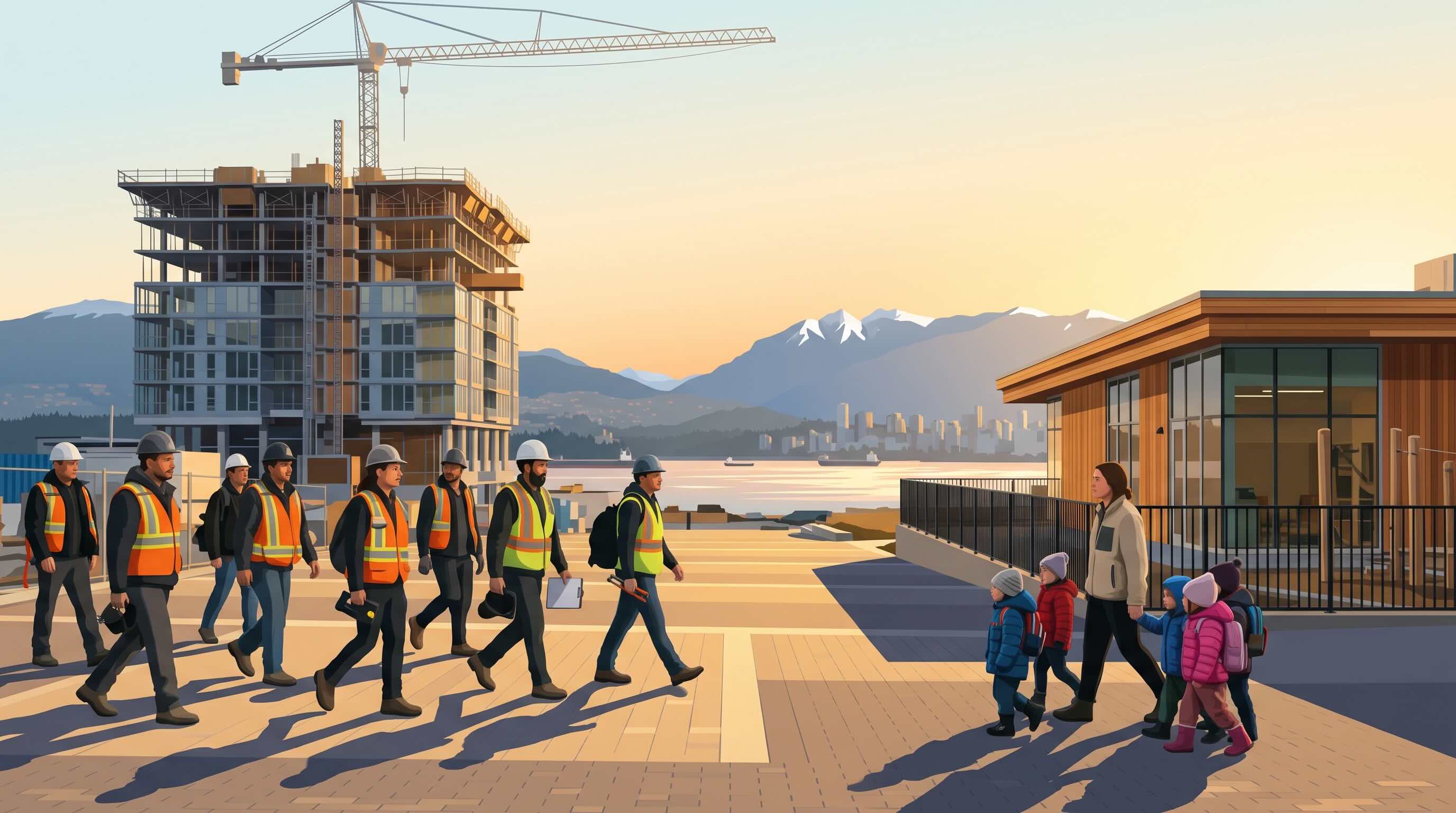
New Brunswick Tightens NB Experience Pathway, Limits Invitations to Healthcare, Education, and Construction

May 4 update: NB Experience pathway shifts to a "three-sector only" intake

Under the new policy announced by the Government of New Brunswick, as of May 4, 2026, the NB Experience pathway of the Skilled Worker Stream will issue ITAs exclusively to candidates whose occupations fall under one of the following three sectors:

  • Healthcare
  • Education
  • Construction trades

Candidates whose occupations fall outside these three sectors will not receive new ITAs, even if they have already submitted a valid EOI and remain in the pool. The province has stated this restriction applies "until further notice."

The NB Experience pathway is one of NBPNP's core routes for applicants who have already lived and worked in the province. Per official guidance, candidates must have at least 12 months of continuous full-time work experience in New Brunswick, hold a permanent, non-seasonal full-time job offer (at least 30 hours per week) from an in-province employer, and meet a minimum Canadian Language Benchmark (CLB) of 4 along with applicable educational credential requirements. In other words, the workers most affected are those who have already built a life in the province and were relying on their local work experience as their main competitive edge — but whose occupations now fall outside the targeted sectors.

Allocation pressure meets federal expansion: a counter-cyclical provincial squeeze

In its announcement, the province cited the limited nomination space remaining under the pathway as the key driver of the change. As of publication, the Government of New Brunswick has not publicly disclosed its full 2026 nomination allocation; based on recent draw trends tracked by industry observers, the province's total 2026 allocation is estimated at around 3,603. How those nominations are split among the various streams and pathways is not yet clear.

The provincial squeeze stands in contrast to a notable federal-level expansion. Immigration, Refugees and Citizenship Canada (IRCC) has lifted the national PNP target for 2026 to 91,500 spots, up from roughly 55,000 in 2025 — an increase of about 66%, widely described as the largest single-year jump in the program's history. Against that backdrop of looser federal totals, New Brunswick's decision to narrow the NB Experience pathway to three sectors signals a deliberate provincial choice to channel a still-tight pool of nominations toward the labour-shortage areas it considers most strategic: healthcare, education, and construction.

A continuation of February's sweeping changes

The May 4 announcement did not come out of nowhere. It builds on a series of structural adjustments the province introduced earlier in 2026.

On February 3, 2026, New Brunswick rolled out a broad set of changes to the NBPNP:

  • Accommodation and food services (NAICS 72): Both the Skilled Worker Stream and the Express Entry stream stopped accepting new EOIs and issuing ITAs to candidates working in this sector — covering chefs, food and beverage servers, hotel front desk staff, room attendants, and a range of other front-line hospitality roles.
  • Skilled Worker Stream: The province also blocked EOIs and ITAs from candidates in 14 specific NOC codes spanning multiple sectors, including 65100 (cashiers), 62010 (retail sales supervisors), and 65101 (service station attendants).
  • Express Entry stream: Four additional NOC codes were declared ineligible for EOI consideration or ITA issuance.
  • Private Career College Graduate Pilot: Extended through the end of 2026, but limited to international students already enrolled in an eligible program at one of two designated New Brunswick colleges.
  • Atlantic Immigration Program (AIP): Several concurrent updates were also announced.

Taken together, the February and May rounds of changes show a clear policy direction: with allocation space tightening at the provincial level — even as federal totals expand — New Brunswick is steadily redirecting its limited nominations away from retail and hospitality work and toward sectors it views as more strategically aligned with the province's long-term needs.

Two transition options for candidates outside the targeted sectors

For applicants who have already submitted an EOI under the Skilled Worker Stream but whose occupations do not fall within the three targeted sectors, the Government of New Brunswick recommends one of two paths to remain in contention under another program or stream, if eligible:

  1. Withdraw the existing EOI and submit a new one under a different program or stream.
  2. Keep the existing NBPNP EOI in place while creating a separate INB profile to submit an additional EOI under another stream — or, if eligible, an AIP endorsement application.

Importantly, the second option requires the applicant to use a different email address than the one tied to the original NBPNP EOI; candidates considering this path will need to have a second email account ready to avoid profile conflicts.

For long-time New Brunswick workers whose occupations now fall outside the three priority sectors, the most practical and pressing step in the months ahead will be to reassess their options — including whether they qualify for AIP or for another NBPNP stream — and to move quickly to keep their immigration plans on track.


Friendly reminder: There are many pathways to immigrate to Canada. We recommend first using UNA AI to generate an objective and neutral immigration plan, so you can gain an initial understanding of the possible immigration pathways and their requirements, and then choose to proceed with one-on-one consultations with a licensed Canadian immigration consultant partnered with UNA.
快速通道重启STEM类别抽选:600份邀请,最低分547
Express Entry resumes STEM draws with 600 invitations at CRS 547
On November 26, 2026, Immigration, Refugees and Citizenship Canada (IRCC) held the 456th Express Entry draw, issuing 600 invitations to apply (ITAs) for permanent residence to candidates in the Science, Technology, Engineering and Mathematics (STEM) category, with a minimum Comprehensive Ranking System (CRS) score of 547. Candidates at 547 were ranked by the date and time they submitted their profiles, with a cut-off of December 2, 2025, at 16:52:51 UTC. It was the first STEM draw since April 11, 2024, when IRCC issued 4,500 invitations at a cut-off of 491. The rules have changed since then: the eligible occupation list has shrunk to 11 jobs, the work-experience threshold has risen from six months to 12, and high-wage points introduced on November 3, 2026, have more than doubled the number of candidates scoring above 500, pushing this round's cut-off 56 points above the last one. IRCC notes that 547 is the minimum for this round only, not a fixed threshold for the category.
11/27/2026
快速通道第455轮:法语类别发出6,000份邀请,分数线降至401分
Express Entry Round 455 Sends 6,000 Invitations to French Speakers as Cut-Off Slips to 401
Immigration, Refugees and Citizenship Canada (IRCC) held Express Entry round 455 on November 25, 2026, issuing 6,000 Invitations to Apply (ITAs) for permanent residence to candidates in the French-Language proficiency category (2026 version 2); the lowest invited Comprehensive Ranking System (CRS) score was 401, and the tie-break cut-off was September 12, 2026, 21:59:55 UTC. It was the second round of invitations since the new CRS rules took effect on November 3 and the first French-language selection under those rules: compared with round 452 on October 27, invitations rose from 5,000 to 6,000, an increase of 20%, and the cut-off fell from 407 to 401. IRCC has now held 67 rounds in 2026 and issued 157,408 invitations in total; the French category accounts for 13 rounds and 66,500 ITAs, or 42.25% of the total, keeping it the largest category ahead of the Canadian Experience Class (CEC) by 8,750 invitations. The expansion is driven by the federal French immigration target: 9% of permanent residents admitted outside Quebec in 2026, or 30,267 people; most of this round's invitees, however, will likely land in 2027 and count toward next year's 9.5% target.
11/26/2026
加拿大把最多10万个境内工人转永居名额交到各省手中,提名截止线定在2027年3月31日
Canada hands provinces up to 100,000 worker permanent residence spaces, with nominations due by March 31, 2027
On November 12, 2026, the Honourable Lena Metlege Diab, Minister of Immigration, Refugees and Citizenship, set out in Dieppe, New Brunswick, how the one-time measure announced in Budget 2026 will work: Ottawa will offer provinces and territories optional additional Provincial Nominee Program (PNP) allocations to convert foreign workers who are already employed in Canada, and already settled in their communities, along with their families, into permanent residents, up to a combined 100,000 people, with the spaces intended to be used by March 31, 2027, and admissions completed during 2027. Provinces and territories can also draw candidates from permanent residence applications already filed in their jurisdictions, including those under the Atlantic Immigration Program (AIP) and under federal programs and pilots that are now closed to new applications, namely the Start-up Visa Program, the Self-Employed Persons Program, the Agri-Food Pilot and the home care worker programs. Immigration, Refugees and Citizenship Canada (IRCC) also listed four groups of existing applicants: 32,000 people under the Hong Kong permanent residence pathway, 18,800 under the Ukraine family reunification pathway, 12,600 whose applications have already been found eligible on humanitarian and compassionate (H&C) grounds, and 45,000 spouses and dependent children of Canadian citizens and permanent residents, a combined 108,400 against a stream ceiling of 100,000. The worker spaces sit outside the 380,000 annual target set by the 2027-2029 Immigration Levels Plan and outside the 95,000 regular PNP allocation, are a one-time arrangement, and are independent of the In-Canada Worker Initiative created by Budget 2025.
11/25/2026
快速通道第454轮:省提名专场发出1,999份邀请,分数线降至673分
Express Entry Draw 454: PNP-Only Round Issues 1,999 ITAs as CRS Cutoff Falls to 673
Immigration, Refugees and Citizenship Canada (IRCC) held Express Entry draw 454 on November 23, 2026, issuing 1,999 Invitations to Apply (ITAs) for permanent residence (PR) exclusively to Provincial Nominee Program (PNP) candidates, with a minimum Comprehensive Ranking System (CRS) score of 673 and a tie-breaking time of 3:50:44 UTC on July 31, 2026. It was the first round of invitations since IRCC paused draws on October 28, ending a 26-day gap, and the largest PNP-only round of 2026: the previous round on October 26 issued only 792 invitations at a cutoff of 761, while the new single-round total is the highest since 2,985 invitations on May 30, 2024. The cutoff of 673 is 88 points below the previous round and 24 points below the year's low of 697 set on August 31. Because a provincial nomination automatically carries 600 points, that cutoff corresponds to a base score of only about 73. A lower cutoff does not mean looser selection criteria: only 2,068 candidates in the pool scored above 601 at the time, and this round all but emptied the nominated cohort. The institutional backdrop for that "pool-clearing" issuance is a 2027 PNP admissions target that rises to 95,000, with provinces required to use the additional allocations by March 31, 2027.
11/24/2026
西北地区新增50个提名名额一轮抽完:入门及半技术类别获邀最多
NWT uses up its 50 added nominations in a single draw, with Entry Level/Semi-Skilled occupations invited most
On November 18, 2026, the Northwest Territories (NWT) held an unscheduled draw, issuing 50 invitations to apply from 137 expressions of interest (EOIs) and using up exactly the 50 nomination allocations the federal government had added. Entry Level/Semi-Skilled Occupations received 21 invitations, the most of the three streams, followed by NWT Express Entry with 19 and Skilled Worker with 10. Forty of the invited candidates work in Yellowknife and 10 work in other communities, and invited scores ranged from 314 to 492. The top-up raised the territory's 2026 nomination allocation from 300 to 350, the result of two increases on an initial 197 and the highest level the territory has ever received; with this round, five draws issued 403 invitations over the year, and invited candidates must submit a complete application within one week of receiving their invitation.
11/23/2026
IRCC更新临时居民处理时间:巴基斯坦超级签证升至107天,三国学签各减一周
IRCC updates temporary resident processing times: Pakistan super visa climbs to 107 days, study permits fall one week in three countries
Immigration, Refugees and Citizenship Canada (IRCC) published new temporary resident processing time estimates on Nov. 18, 2026, measured as of that date and compared with the Nov. 12 update. Study permits moved one week faster in India, Pakistan and the Philippines; Pakistan's visitor visa fell from 57 days to 46 days, a decrease of 11 days and the largest decline of the period; super visas diverged, with Pakistan rising from 91 days to 107 days, an increase of 16 days, while the Philippines fell from 104 days to 97 days, a decrease of 7 days. Work permits were unchanged in all six locations, with the United States at 3 weeks and in-Canada applications at 16 weeks. Extensions moved the other way, with work permit extensions lengthening from 10 weeks to 13 weeks, study permit extensions from 6 weeks to 8 weeks, and visitor records shortening from 304 days to 296 days. IRCC finalized 2,292,410 temporary resident applications in the first nine months of 2026 and had 347,935 still in inventory as of Sept. 30, a decrease of 17,490 from the end of August. The next temporary resident update is expected around Nov. 25.
11/20/2026
纽芬兰与拉布拉多省11月16日发出54份邀请 大西洋移民项目占比升至近八成
Newfoundland and Labrador Issues 54 Invitations in November 16 Draw as AIP Share Reaches 77.8%
Newfoundland and Labrador's Office of Immigration and Multiculturalism (OIM) held its 25th provincial immigration draw of 2026 on November 16, issuing 54 invitations to apply, 42 of them through the Atlantic Immigration Program (AIP) and 12 through the Newfoundland and Labrador Provincial Nominee Program (NLPNP). At 77.8%, AIP's share was the highest of any single draw this year, while NLPNP's 12 invitations were its lowest of 2026. Invitees have 30 days to file a nomination or endorsement application, a window temporarily cut from the usual 60 days; once approved, provincial nominees already in Canada can apply for a Bridging Open Work Permit (BOWP) without first obtaining an acknowledgement of receipt (AOR), under a federal measure that took effect on June 9 and expires on December 31, while AIP endorsees are excluded from that measure but can obtain a two-year, employer-specific work permit on the strength of a provincial referral letter. With this draw, the province has held 25 draws in 2026 and issued 3,381 invitations, 2,909 through NLPNP and 472 through AIP: the total is almost level with 2025's 3,376 across 13 draws, yet AIP's share has fallen from 26.7% to 14.0%, and invitations now exceed the province's 2,854 nomination spaces for the year.
11/19/2026
卑诗省提名定向抽选发出至少385份邀请 幼儿教育工作者占153份
British Columbia Issues at Least 385 Targeted Invitations, 153 of Them to Early Childhood Educators
On November 13, 2026, the British Columbia Provincial Nominee Program (BCPNP) held its seventh Care and Build occupation-targeted draw of the year, issuing at least 385 invitations to apply for a provincial nomination across four categories: 153 to early childhood educators, 128 to construction trades, 103 to health care practitioners and fewer than 5 to veterinary care. Minimum scores fell to 95 in childcare and 72 in health care, both 2026 lows for their categories; construction held at 94 for a third consecutive round; and veterinary care rose 14 points to 100, the highest threshold of the four. Invitees must file a complete nomination application within 30 calendar days, the Skills Immigration application fee has stood at CAD 1,750 since January 2026, nominees may ask the province for a work permit support letter that spares their employer a Labour Market Impact Assessment (LMIA), and those who have already submitted a permanent residence (PR) application may also qualify for a Bridging Open Work Permit (BOWP). As of that day, B.C. had issued at least 7,456 Skills Immigration invitations in 2026 against a full-year nomination allocation of 6,254, while the Skills Immigration registration pool held 7,235 profiles as of November 3, about 53.5% of them clustered in the 90-119 point band.
11/19/2026
加拿大为新增省提名名额划定使用期限:各省须在2027年3月31日前完成提名
Canada puts a deadline on its extra PNP spaces: provinces must nominate by March 31, 2027
On Nov 12, 2026, Immigration, Refugees and Citizenship Canada (IRCC) announced in Dieppe, New Brunswick, that the additional Provincial Nominee Program (PNP) allocations offered to provinces and territories are "intended to be used by March 31, 2027," a window of 139 days from publication. The spaces are for foreign workers already in Canada outside Quebec, plus their accompanying family, and come from up to 100,000 economic permanent residence spaces that Budget 2026 reserved for the 2027 temporary-resident-to-permanent-resident transition measures (2027 TPTMs). They sit outside the 95,000 PNP spaces in the 2027-2029 Immigration Levels Plan, and provinces choose how much of the extra space to use, nominating through either the base PNP or the Express Entry-aligned enhanced PNP. Because the one-year promise must be delivered by the end of 2027, IRCC will have only nine months after nominations close to finish processing, against a base PNP processing time now running at 14 months. As of publication, no province or territory had publicly committed to using any of the space, and IRCC had published no distribution.
11/13/2026
加拿大公布10万个人道类转永居名额分配,香港与乌克兰通道拟于2027年清空积压
Canada publishes 2027 breakdown of 100,000 extra PR spaces for in-Canada humanitarian cases
On November 10, 2026, Immigration, Refugees and Citizenship Canada (IRCC) published a breakdown of the roughly 100,000 additional permanent residence spaces it has set aside for 2027 under the "specific humanitarian populations" cohort of its in-Canada transition measures: 32,000 for the Hong Kong permanent residence pathways, 18,800 for the Ukraine Family Reunification Pathway, 45,000 for the spouses, common-law partners and dependent children of Canadian citizens and permanent residents, and 12,600 for humanitarian and compassionate (H&C) applicants already approved in principle. Every space is reserved for people who are already in Canada and have already applied for permanent residence, and applicants do not need to do anything to benefit. The cohort is one half of the 200,000 extra spaces announced in Budget 2026; the other 100,000 will go to in-Canada workers and their families through the Provincial Nominee Program (PNP). Stacked on top of the 380,000 permanent residence target for 2027, and measured against the top of the 352,500–422,000 range, the extra spaces produce the widely cited 622,000 notional ceiling. IRCC says it intends to process every remaining application under the Hong Kong and Ukraine pathways in 2027, but the four line items add up to 108,400 — 8,400 more than the 100,000 figure attached to the cohort, a gap the release does not explain.
11/12/2026
Sorry, your request failed
Please try again
OK