
The best is yet to come
OK
Log out of UNA?
Log out
Cancel
Get Personalized Immigration Plans in 5 Minutes
My Appointments
Welcome to UNA
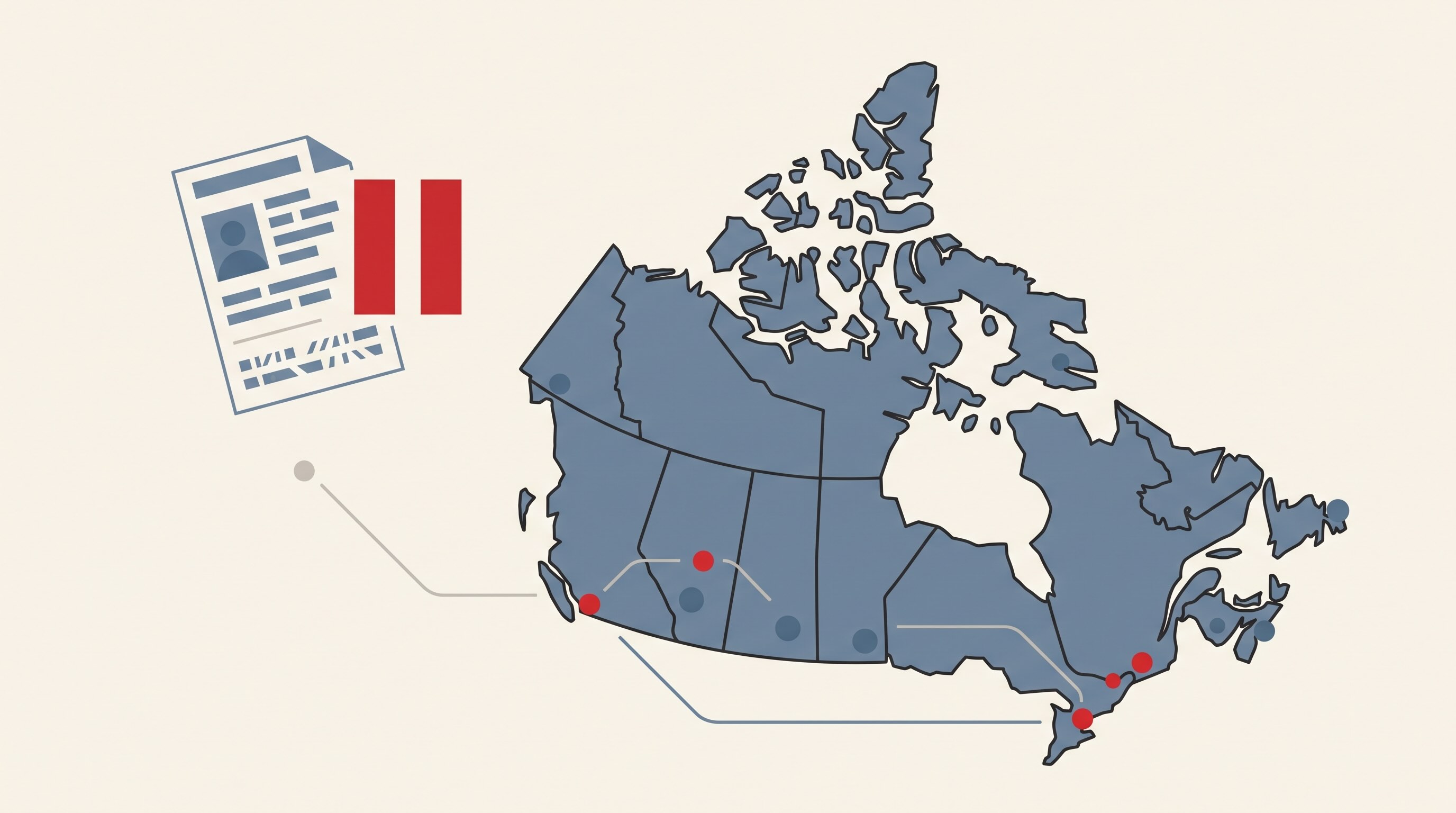
IRCC Announces 2025 Permanent Residence Application Processing Plan

Immigration Programs That Will Clear All Backlogs in 2025

According to IRCC's plan, the following economic class permanent residence application programs will process all pending applications in 2025:

  • Canadian Experience Class (CEC)
  • Federal Skilled Worker Program (FSWP)
  • Federal Skilled Trades Program (FSTP)
  • Enhanced Provincial Nominee Programs (Express Entry-aligned PNP streams)
  • Community Pilot Programs
  • Quebec Experience Class (PEQ)
  • Quebec Skilled Worker Selection Program (PSTQ)
  • Quebec Pilot Programs

Immigration Programs Processing Only Partial Backlogs

Other economic immigration programs will maintain certain application backlog levels and only process a portion of pending applications. Specific processing ratios are as follows:

Immigration Program2025 Processing Ratio
Agrifood Pilot5%
Atlantic Immigration Program (AIP)33%
Caregiver Pilots14%
Economic Mobility Pathways Pilot (EMPP)12%
Base Provincial Nominee Program (Non-Express Entry)35%
Quebec Business Immigration3%
Start-up Visa Program2%

Detailed Data by Program

Express Entry Programs

As of September 11, the application backlog and processing plan for Express Entry programs are as follows:

Application Backlog and Processing Volume:

  • Canadian Experience Class (CEC): 19,300 applications in backlog, planning to process 19,300
  • Federal Skilled Worker (FSW): 12,500 applications in backlog, planning to process 12,500

Application Processing Time Changes (Past Year):

Program2024 Q22024 Q32024 Q42025 Q12025 Q2
FSW6 months5 months6 months6 months6 months
CEC6 months6 months6 months7 months5 months

Provincial Nominee Program (PNP)

The Provincial Nominee Program is processed in two categories:

Application Backlog and Processing Volume:

  • Enhanced PNP (Express Entry-aligned): 16,300 applications in backlog, planning to process 16,300
  • Base PNP (Non-Express Entry): 87,700 applications in backlog, planning to process 30,695 (35%)

Application Processing Time Changes:

Program2024 Q22024 Q32024 Q42025 Q12025 Q2
Enhanced PNP6 months6 months7 months7 months6 months
Base PNP11 months11 months13 months24 months19 months

Notably, Base PNP processing times surged to 24 months in the first quarter of 2025. Although they declined slightly to 19 months in the second quarter, they remain significantly higher than 2024 levels.

Quebec Immigration Programs

Quebec's immigration programs show a polarized trend:

Application Backlog and Processing Volume:

  • Quebec Skilled Worker Category: 27,600 applications in backlog, planning to process 27,600
  • Quebec Business Immigration Category: 4,100 applications in backlog, planning to process only 123 (3%)

Application Processing Time Changes:

Program2024 Q22024 Q32024 Q42025 Q12025 Q2
Quebec Business Immigration20 months17 months22 months108 months108 months
Quebec Skilled Worker8 months8 months11 months8 months9 months

Quebec Business Immigration processing times skyrocketed to 108 months (9 years) in 2025, reflecting severe processing delays facing this category.

Atlantic Immigration Program (AIP)

Application Backlog and Processing Volume:

  • 12,100 applications in backlog, planning to process 3,993 (33%)

Application Processing Time Changes:

2024 Q22024 Q32024 Q42025 Q12025 Q2
12 months13 months17 months27 months24 months

AIP processing times significantly lengthened in 2025, increasing from 12 months in Q2 2024 to 27 months in Q1 2025.

Federal Economic Pilot Programs

Federal economic pilot programs include the Agrifood Pilot (now closed), Caregiver Pilots (including the Home Care Worker Immigration Pilot HCWP, Home Child Care Provider Pilot and Home Support Worker Pilot, with the latter two now closed), and the Economic Mobility Pathways Pilot (EMPP).

Application Backlog and Processing Volume:

ProgramApplications in BacklogProcessing RatioPlanned Processing Volume
Agrifood Pilot8,9005%445
Caregiver Pilots34,40014%4,816
EMPP2,50012%300

Application Processing Time Changes:

Program2024 Q22024 Q32024 Q42025 Q12025 Q2
Agrifood Pilot22 months32 months60 months180 months228 months
Caregiver Pilots31 months29 months27 months84 months108 months
EMPP10 months8 months10 months36 months54 months

These pilot programs experienced significant processing time extensions in 2025, with the Agrifood Pilot even reaching 228 months (19 years).

Additionally, IRCC recently closed the "applicants not in Canada" stream of the HCWP, indicating that the department will not further add to its caregiver category backlog this year.

Federal Community Pilot Programs

Federal community pilot programs include the Rural Community Immigration Program (RCIP), Francophone Community Immigration Program (FCIP), and the Rural and Northern Immigration Pilot (RNIP, now closed).

Application Backlog and Processing Volume:

  • 3,500 applications in backlog, planning to process 3,500

Application Processing Time Changes:

2024 Q22024 Q32024 Q42025 Q12025 Q2
12 months14 months12 months12 months7 months

Community pilot program processing times improved to 7 months in Q2 2025, making it one of the few programs with faster processing speeds.

Start-up Visa Program (SUV)

The Start-up Visa program faces the most severe processing bottleneck:

Application Backlog and Processing Volume:

  • 38,600 applications in backlog, planning to process only 772 (2%)

Application Processing Time Changes:

2024 Q22024 Q32024 Q42025 Q12025 Q2
48 months51 months71 months420 months420 months

Start-up Visa program processing times surged to 420 months (35 years) in 2025, a figure reflecting the extreme processing delays and backlog issues facing this program.

Conclusion

IRCC's 2025 processing plan demonstrates clear priority divisions. Express Entry and its aligned provincial nominee programs, Quebec skilled worker immigration, and community pilot programs will receive priority processing, while the Start-up Visa, Quebec Business Immigration, and some federal pilot programs face long-term application backlogs and processing delays. Applicants should plan their immigration timelines appropriately based on the processing status of their respective programs.

Source:  https://www.canada.ca/en/immigration-refugees-citizenship/corporate/transparency/transition-binders/minister-2025-05/economic-immigration.html

Friendly reminder: There are many pathways to immigrate to Canada. We recommend first using UNA AI to generate an objective and neutral immigration plan, so you can gain an initial understanding of the possible immigration pathways and their requirements, and then choose to proceed with one-on-one consultations with a licensed Canadian immigration consultant partnered with UNA.
BC省第二轮偏远医疗支持抽签发出33份邀请,分数线抬高至60分
B.C. issues 33 invitations in second rural health support draw as cutoff climbs to 60
On Sept 17, 2026, the British Columbia (B.C.) Provincial Nominee Program (BCPNP) held the second draw under its Temporary Rural/Remote Health Support Initiative (TRHSI), issuing 33 invitations to apply for provincial nomination to cleaning and security staff employed by a public health authority in a rural or remote part of the province, with a minimum score of 60 — 10 points above the 50-point cutoff used in the first draw on July 23, 2026 — while the number of invitations fell from 60 to 33, bringing the two-draw total to 93 invitations to apply (ITAs), or roughly 37% of the initiative's cap of 250 nominations. TRHSI is a one-time, time-limited permanent residence (PR) pathway launched when B.C. restructured its nominee program on April 23, 2026; registration opened June 15, 2026, and eligibility is confined to three National Occupational Classification (NOC) codes — 65312, 65310 and 64410 — with applicants required to have completed nine months of continuous full-time work with the same employer, in the same eligible region and in the same occupation. The registration window was originally set to close at midnight on Aug 31 but was extended to 11:59 p.m. on Oct 7, 2026 because of wildfire-related impacts. The wider context is that B.C.'s 2026 nomination allocation rose to 6,254 after the federal government added 1,000 spaces in August, with at least 35% of nominations required to go to candidates outside Metro Vancouver; and that since June 9, 2026, base Provincial Nominee Program (PNP) nominees applying for PR no longer need to wait for an Acknowledgement of Receipt (AOR) before applying for a Bridging Open Work Permit (BOWP) — a federal temporary measure running to Dec 31, 2026 that matters especially to TRHSI applicants, who have no Express Entry-aligned option.
09/20/2026
加拿大快速通道连续两日抽签:CEC分数线回落至519分,高管类别门槛创设立以来新低
Canada holds back-to-back Express Entry draws: CEC cut-off eases to 519, while the senior managers category sets a record low
Immigration, Refugees and Citizenship Canada (IRCC) held Express Entry draws on two consecutive days, September 15 and 16, 2026, issuing invitations to apply (ITAs) to two very different groups of candidates. Round #443, conducted on September 15 at 10:21:41 UTC, issued 2,000 invitations under the Canadian Experience Class (CEC) with a minimum Comprehensive Ranking System (CRS) score of 519 and a tie-breaking rule of March 26, 2026 at 00:16:39 UTC; round #444, held the following day at 12:44:28 UTC, issued 250 invitations under the category for senior managers with Canadian work experience at a minimum CRS score of just 389, with a tie-breaking rule of September 1, 2026 at 23:05:13 UTC. Both rounds were authorized by ministerial instructions signed in Ottawa by Immigration Minister Lena Metlege Diab under the Immigration and Refugee Protection Act (IRPA). The senior managers category, created in February 2026, has now run three draws, with the cut-off falling from 429 in its first round to 392 and then 389 -- a cumulative drop of 40 points and the lowest threshold in the category's short history. Over the same period, the CEC cut-off has declined for a third consecutive round after peaking at a 2026 high of 523 on August 18. Through round #444, IRCC has held 56 draws and issued 128,982 invitations in 2026, an annual record since Express Entry was launched.
09/18/2026
加拿大快速通道第442轮省提名抽签发出576份邀请,分数线回升至734分
Express Entry round #442 issues 576 PNP invitations as the cut-off climbs back to 734
Immigration, Refugees and Citizenship Canada (IRCC) held the 442nd Express Entry round on September 14, 2026, issuing 576 invitations to apply (ITAs) for permanent residence to candidates in the Provincial Nominee Program (PNP) category with a minimum Comprehensive Ranking System (CRS) score of 734, up 37 points from the 697 recorded on August 31, the lowest PNP cut-off of the year, while the size of the round edged past the 562 invitations issued two weeks earlier to make it the second-largest PNP round since June 22. The ministerial instruction behind the round was signed in Ottawa by Immigration Minister Lena Metlege Diab, and the tie-breaking rule was set at 21:39:50 UTC on August 29, 2026, barely two weeks before the draw itself, a sign that a substantial share of the candidates sitting exactly at 734 were recently nominated applicants who had only just entered the pool. With this round, IRCC has held 54 Express Entry draws in 2026 and issued 126,732 invitations in total, including 18 PNP rounds accounting for 8,537 invitations, 22.8 percent more than the 6,947 issued over the same period in 2025 and consistent with Ottawa's decision to restore the 2026 provincial nominee admissions target to 91,500. A pool snapshot published the day before the draw showed 226,793 candidates in the pool, of whom roughly 574 scored 601 or higher, almost exactly matching the 576 invitations issued, which means IRCC once again cleared out nearly the entire top tier of nominated candidates in a single round. Analysts expect the remaining PNP rounds this year to keep to a roughly biweekly rhythm of a little over 400 invitations each, with the cut-off driven largely by how quickly the provinces feed new nominations into the federal pool.
09/15/2026
纽芬兰与拉布拉多省9月10日仅发出36份省提名邀请,创年内单轮最低
Newfoundland and Labrador issues just 36 provincial nomination invitations on September 10, the smallest round of the year
On September 10, 2026, the Newfoundland and Labrador Office of Immigration and Multiculturalism (OIM) invited 36 candidates to apply for a provincial nomination through the Newfoundland and Labrador Provincial Nominee Program (NLPNP) — the province's 14th draw of the year, its smallest round of 2026, and the third round since the Expression of Interest (EOI) model launched in February 2025 in which no Atlantic Immigration Program (AIP) candidate received an invitation, the second such round in a row. The province has now issued 2,592 invitations in 2026, comprising 2,198 through the NLPNP and 394 through the AIP; by comparison, Newfoundland and Labrador issued 3,376 invitations across 13 rounds in all of 2025, meaning that this year's total is 784 lower despite one additional draw, with round sizes contracting steadily since mid-August. The province has still not published its 2026 nomination allocation, and industry media have suggested that the recent pattern of small, frequent draws may reflect a limited pool of remaining spaces, though the province has offered no explanation. For those invited, a federal temporary measure in effect since June 9 allows provincial nominees applying for permanent residence (PR) from inside Canada to apply for a Bridging Open Work Permit (BOWP) before receiving an Acknowledgement of Receipt (AOR), helping them avoid a gap in status during a base provincial nominee processing cycle that currently runs about 13 months.
09/14/2026
阿尔伯塔省9月初三轮省提名抽签发出722份邀请,科技与医疗专场分数线均为60分
Alberta Issues 722 Invitations Across Three Early-September Draws, With Tech and Health Care Rounds Both Cutting Off at 60
The Alberta Advantage Immigration Program (AAIP) held three draws between September 1 and September 9, 2026, all aimed at candidates holding an Alberta job offer, issuing a combined 722 invitations to apply for a provincial nomination: on September 1, the Alberta Opportunity Stream invited 575 candidates with a minimum score of 56; on September 3, the Alberta Express Entry Stream – Accelerated Tech Pathway invited 96 tech workers with a minimum score of 60; and on September 9, the Dedicated Health Care Pathway – Express Entry invited 51 health care workers, also at a minimum score of 60. Invited candidates have a set window in which to submit a provincial nomination application, and once nominated they apply to the federal government for permanent residence (PR), with those already in Canada able to apply for a Bridging Open Work Permit (BOWP) while they wait; under Operational Bulletin 699, which Immigration, Refugees and Citizenship Canada (IRCC) issued and brought into force on June 9, 2026, in-Canada provincial nominees who have not yet received an Acknowledgement of Receipt (AOR) for their PR application may apply for a BOWP on the strength of their submission confirmation email and proof of payment, a measure that runs until December 31, 2026. As of September 9, Alberta had issued 4,864 nominations this year, roughly 74 percent of its full-year allocation of 6,603, leaving 1,739 spots; the Worker Expression of Interest pool still held 35,957 active profiles, of which the Alberta Opportunity Stream alone accounted for 22,381 against just 837 remaining nominations in that stream, so competition remains intense. Health care and technology are both among Alberta's designated priority sectors for 2026, alongside construction, aviation, agriculture and manufacturing.
09/12/2026
加拿大恢复工签持有人免学签就读政策,有效期至2027年底
Canada Restores Study-Permit Exemption for Work Permit Holders, in Force Until the End of 2027
Immigration, Refugees and Citizenship Canada (IRCC) announced a temporary public policy on September 9, 2026 that allows foreign nationals holding a valid work permit to enrol in a course of six months or less without applying for a study permit, even if the course ends after the period of stay authorized on their first entry to Canada. Signed by Minister of Citizenship and Immigration Lena Metlege Diab on August 5, the policy took effect on September 4, runs until December 31, 2027, and may be revoked at any time. It revives a measure of the same name introduced in June 2023 that expired on June 27 of this year, but with a narrower reach: the earlier policy let eligible workers, including those on maintained status, study programs of any length without a study permit, whereas the new one requires applicants to hold a valid work permit and waives only the requirement that a course be completed within the initial authorized period of stay. As of June 30, 2026, roughly 1.55 million foreign nationals in Canada held a work permit only, and about 630,000 held a study permit. IRCC says the measure is intended to help workers already in the country, such as tradespeople, nurses and laboratory technicians, upgrade their skills and credentials to fill gaps in critical sectors, and that it does not change the government's overall target of reducing temporary residents to less than 5 percent of the population.
09/10/2026
加拿大皇家银行发布移民策略报告,建议联邦取消快速通道类别抽签、回归纯积分制选拔
RBC Report Urges Ottawa to Scrap Express Entry Category Draws and Return to Pure Points-Based Selection
On September 1, 2026, RBC Thought Leadership, the think tank arm of the Royal Bank of Canada (RBC), published a report titled A Smarter Immigration Strategy, arguing that Express Entry has drifted away from the purpose it was built for: since category-based selection was introduced in 2023, lower-scoring candidates have been able to jump the queue through an occupational or language category, while higher-scoring applicants waiting in the pool are left behind. Citing government data, the report finds that the Comprehensive Ranking System (CRS) score needed for an invitation through the Canadian Experience Class (CEC) is "over 100 points more, on average" than what some category draws require, a gap that has been especially visible in the 2026 rounds: through September 4, CEC cutoffs have stayed between 507 and 523, while the French-language proficiency category fell as low as 382 and the February 19 physician draw cleared at just 169 — the lowest cutoff any category draw has ever recorded. In response, RBC puts forward seven recommendations, including inviting the highest-ranked candidates first, tightening or eliminating category-based draws at the federal level, reversing the 2022 legislation that authorized the categories, setting a minimum share of economic immigration for Express Entry, reintroducing a minimum cutoff based on core factors, devolving targeted category selection to the provinces and territories, and committing to regular recalibration of the CRS formula. It bears emphasizing that these are the policy recommendations of a private institution, not a government decision. As of September 9, neither Immigration, Refugees and Citizenship Canada (IRCC) nor Immigration Minister Lena Metlege Diab had responded publicly to the report, and draws for the French-language, healthcare and physician categories are still running as scheduled; IRCC did, however, consult this spring on merging the three federal high-skilled programs and recalibrating the CRS, and again from August to early September on the shape of the 2027 categories, saying it is considering "narrowing" the number or eligibility scope of labour-shortage categories. The 2027–2029 Immigration Levels Plan is due to be tabled in Parliament by November 1, at which point the overall direction of federal economic immigration should become clearer.
09/09/2026
加拿大学签资金证明标准升至23,448加元,IRCC同步收紧资金来源审查
Canada raises study permit proof-of-funds threshold to $23,448, and tightens scrutiny of where the money comes from
Immigration, Refugees and Citizenship Canada (IRCC) has raised the study permit proof-of-funds requirement as of September 1, 2026, with a single applicant studying outside Quebec now required to show at least $23,448 CAD for a first year of living expenses, up $553 from the previous $22,895, and with the thresholds for larger families rising in step. Alongside the higher dollar figures, IRCC has updated its guidance to make clear that officers will assess not only how much money an applicant has but where it came from and whether it will remain available throughout the period of study, with applicants expected to supply six months of bank statements and documents explaining the source of the deposits shown in them; those enrolled in programs longer than one year must also set out how they intend to pay for the remaining years. The threshold covers living costs only, meaning tuition and round-trip transportation must be demonstrated separately, and Quebec continues to apply its own financial capacity standard through the CAQ, set at $24,617 for a single applicant. The increase extends a policy direction Canada has followed since 2024, combining sharply higher financial requirements with a shrinking study permit cap, which falls to 408,000 for 2026, a 7% reduction from 2025.
09/08/2026
纽芬兰与拉布拉多省9月4日发出97份省提名邀请,本轮未涵盖大西洋移民计划候选人
Newfoundland and Labrador issues 97 provincial nominee invitations on September 4, with no Atlantic Immigration Program candidates selected
Newfoundland and Labrador invited 97 candidates to apply for a provincial nomination through the Newfoundland and Labrador Provincial Nominee Program (NLPNP) on September 4, 2026, in the province's 13th draw of the year and only the second round since it moved to an Expression of Interest (EOI) model in February 2025 in which no Atlantic Immigration Program (AIP) candidate received an invitation. The province has now issued 2,556 invitations in 2026 — 2,162 through the NLPNP and 394 through the AIP — well behind the 3,376 invitations it issued across 13 rounds in all of 2025, with the AIP's share falling from roughly 27% to about 15%. Candidates who receive an invitation should also note a change at the federal level: since June 9, 2026, provincial nominees who submit a permanent residence (PR) application from inside Canada have been able to apply for a Bridging Open Work Permit (BOWP) before receiving an Acknowledgement of Receipt (AOR), allowing them to maintain status while their application is processed; the temporary measure is currently in place until December 31, 2026. Federal processing currently takes about 13 months for base PNP permanent residence applications and about 7 months for Express Entry-aligned (enhanced) nominations.
09/07/2026
加拿大快速通道再向医疗与社会服务人才发出3,500份邀请,分数线维持475分
Canada Issues 3,500 More Express Entry Invitations to Healthcare and Social Services Candidates, With the CRS Cut-Off Holding at 475
On September 4, 2026, Immigration, Refugees and Citizenship Canada (IRCC) held this year's third Express Entry draw targeting healthcare and social services occupations, issuing 3,500 invitations to apply (ITAs) for permanent residence with a minimum Comprehensive Ranking System (CRS) score of 475 — unchanged from the previous healthcare round on June 25 and above the 467 recorded in the category's first round of the year on February 20. The category has now issued 11,500 invitations in 2026. The round was also IRCC's 53rd Express Entry draw of the year, pushing the 2026 total past 126,000 invitations, of which the Canadian Experience Class (CEC) and the French-language proficiency category together account for more than 80 percent — a distribution that reflects Ottawa's current preference for candidates already in Canada while still steering capacity toward shortage occupations. Since IRCC refreshed its category framework on February 19, 2026 and raised the minimum work-experience requirement for renewed categories from six months to one year, healthcare cut-offs have trended higher overall, leaving eligible health and social services workers to reassess both their scores and their timing.
09/05/2026
Sorry, your request failed
Please try again
OK